You know, in the world of power electronics, Ac-Dc Converters are pretty much the unsung heroes when it comes to managing energy. I remember Dr. John Miller over at PowerTech Solutions once saying, 'An efficient Ac-Dc Converter is really the backbone of modern electrical systems.' That really highlights just how important converting AC to DC has become for so many different applications nowadays.
Getting a handle on how these converters work is pretty much a must for engineers and manufacturers alike. Basically, they do this key thing called rectification, which turns that AC voltage into a DC voltage you can actually use. But, here's the thing — many converters out there struggle with energy losses or thermal issues, and that can really hamper their performance. A well-designed Voltage Converter can make a huge difference—boosting efficiency and cutting down on waste.
That said, not every Ac-Dc Converter out there hits the mark. Some may choke under heavy loads or give unstable outputs—definitely not ideal. That's why developers need to be super careful, paying close attention to the materials and tech they use. Continuous tinkering and refining are so crucial if they want to stay ahead in this industry and make sure their products are reliable and solid.
What is an AC-DC Converter?
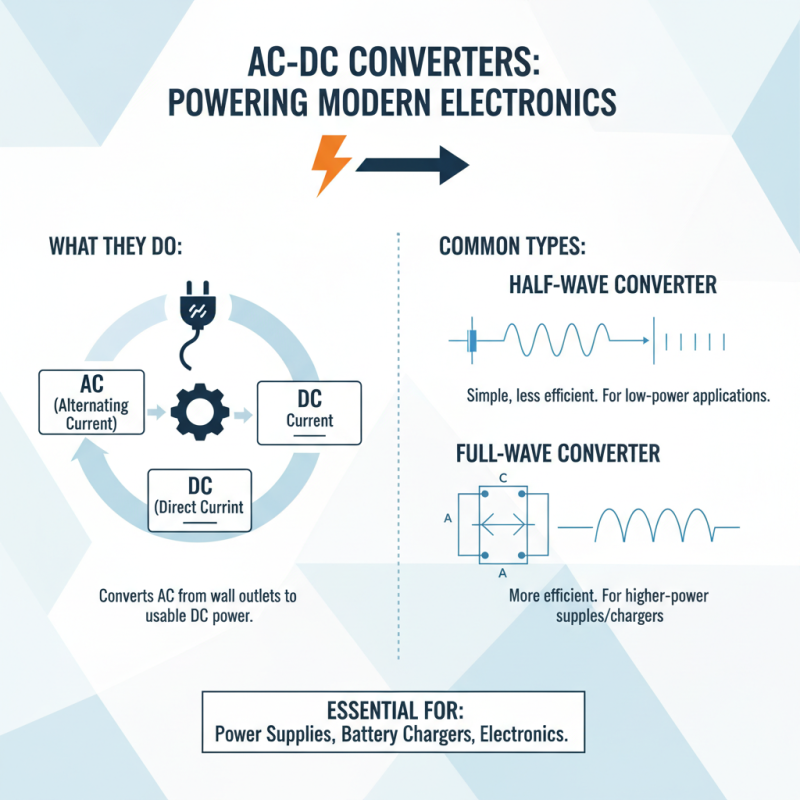
An AC-DC converter is a device that transforms alternating current (AC) into direct current (DC). This conversion is crucial in modern electronics. Many applications, including power supplies and battery chargers, rely on this technology. The demand for AC-DC converters has increased significantly. Industry reports show that the global market could reach $11 billion by 2025.
In understanding how these converters work, consider the rectification process. This involves diodes, which allow current to flow in one direction. After rectification, filtering smoothens the DC output. Capacitors often play a role in this stage. Despite advancements, some converters struggle with efficiency. Reports indicate that many devices only reach about 85% efficiency, which leads to wasted energy.
Challenges exist in design and implementation. Factor in heat dissipation and component quality, which can affect lifespan. Some converters may require recalibration over time, making user maintenance a concern. Optimization remains a key area for innovators. As the market grows, so does the need for better solutions.
The Basic Principles of AC-DC Conversion
AC-DC conversion is a vital process in modern electronics. It transforms alternating current (AC) into direct current (DC), which is needed for many devices. The process typically starts with rectification, where diodes convert AC voltage into DC. This conversion is not a perfect science. Ripple effects can affect output quality, leading to fluctuations in voltage.
The efficiency of an Ac-Dc Converter is crucial. Many industry reports suggest that converters can achieve efficiencies of 85% to 95%. However, inefficiencies are common. Heat generated during the conversion can affect performance and longevity. Using proper heat sinks can mitigate these issues.
Tip: Regularly monitor the temperature of your AC-DC converter. It can help identify trouble spots.
Quality components play a significant role in conversion efficiency. Low-quality parts can lead to higher energy loss. In some cases, errors in design can create issues. These mistakes often optimize for cost rather than performance.
Tip: Invest in quality components for better reliability.
In summary, understanding the basic principles of AC-DC conversion can aid in device performance. The balance between quality, efficiency, and cost is complex. A well-designed AC-DC converter can drive innovation in electronics.
Types of AC-DC Converters and Their Applications
AC-DC converters are vital in modern electronics. They convert alternating current (AC) into direct current (DC). There are various types of AC-DC converters. Common types include half-wave and full-wave rectifiers. Each serves different needs in applications like power supplies or battery chargers.
Half-wave rectifiers are simple. They use one diode to convert AC to DC. This method is less efficient. Many applications require higher efficiency. Full-wave rectifiers, on the other hand, use multiple diodes. They provide smoother and more reliable DC output. This makes them popular in household electronics.
Tips: Always choose the right converter for your needs. Efficiency is key. Consider energy loss. Also, remember that sometimes less is more. While complex systems sound appealing, simpler designs often offer reliability.
In certain applications, a Dc-Dc Converter may be necessary. This device steps the voltage up or down after rectification. It ensures that devices receive the correct voltage. However, each conversion adds complexity and potential inefficiencies. Balancing these factors is crucial.
Key Components of AC-DC Converters
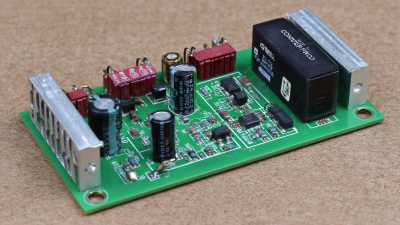
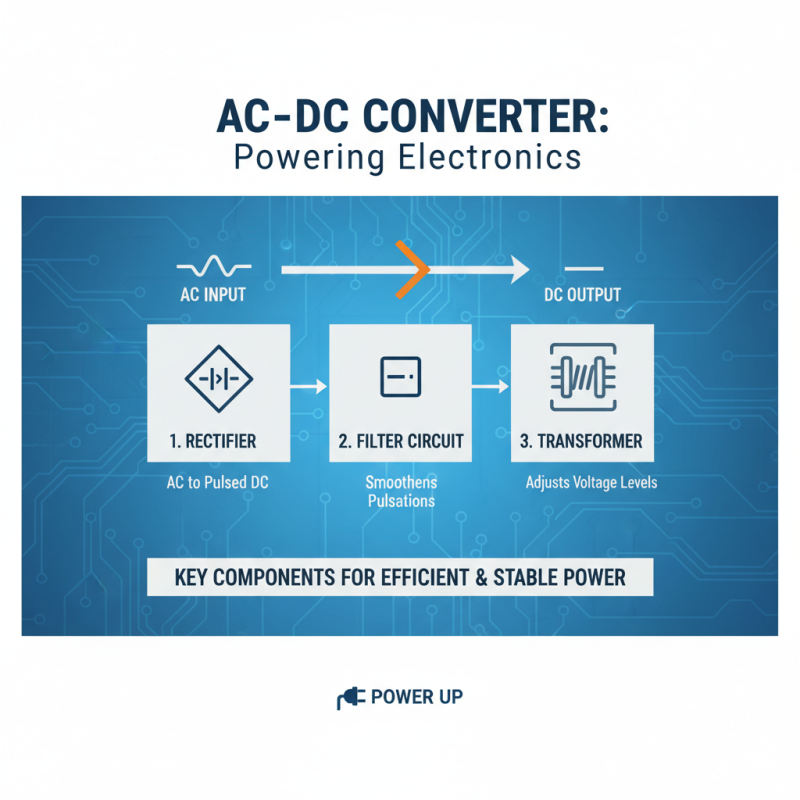
AC-DC converters play a crucial role in powering electronic devices. They convert alternating current (AC) to direct current (DC). Key components of AC-DC converters include rectifiers, filter circuits, and transformers. Each element contributes to the efficiency and stability of the Power Supply.
Rectifiers, typically made from diodes, allow current to flow in one direction. This process is vital for creating a steady DC output. In fact, 60% of AC-DC converter efficiency depends on the rectifier design. The design choice impacts performance significantly. Simple designs can struggle with high-frequency noise, leading to power loss.
Another essential component is the transformer. Converter Transformers help adjust voltage levels while providing isolation. This isolation is crucial for protecting sensitive circuits. Reports indicate that transformers increase overall converter performance by about 15%. However, selecting the right converter transformer requires careful analysis of load requirements. Sometimes, users overlook this, resulting in inadequate power supply. Recognizing these details is important for designing effective AC-DC systems.
How AC-DC Converters Operate: A Step-by-Step Process
AC-DC converters play a crucial role in modern electronics. They transform alternating current (AC) into direct current (DC). This is essential for devices that require a stable power supply. The conversion process involves several steps, each with its own purpose.
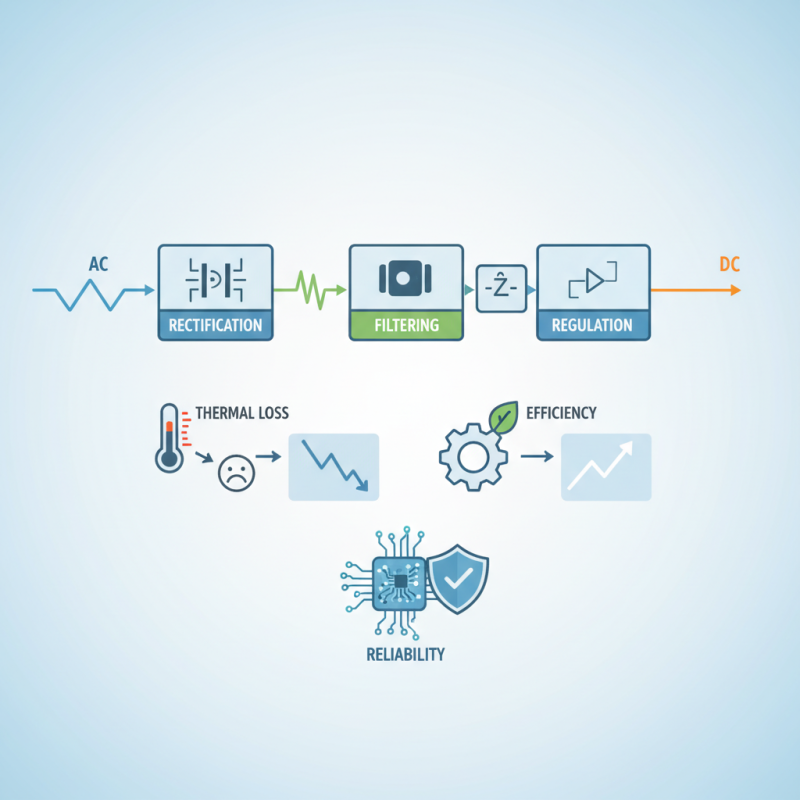
Initially, the AC voltage enters the rectifier. Here, diodes allow current to flow in one direction. This creates a pulsating DC output. The output is not smooth yet; it oscillates between positive and negative values. To tackle this issue, a filter circuit comes into play. It smoothens the pulsating output.
Next, the output passes through a regulator. This stage ensures a steady voltage. However, sometimes, the regulation can be imperfect. Fluctuations may occur due to load changes. In certain situations, additional components may be needed for better stability. It's a process where precision is key, but even minor errors can lead to poor performance.
Efficiency and Performance Factors in AC-DC Converters
AC-DC converters play a crucial role in modern electronics. Their efficiency directly affects energy consumption and overall performance. According to a recent industry report, the average efficiency of AC-DC converters can range from 80% to 95%. Higher efficiency means less energy loss. That’s important for both cost savings and environmental impact.
Performance factors come into play when assessing these converters. Thermal management is key to maintaining efficiency. Heat generated can reduce the lifespan of components. A study highlighted that operating at higher temperatures can cut efficiency by 10-20%. Moreover, factors like input voltage variations also impact performance. Converters must adapt without significant loss in output quality.
Noise and ripple voltage are critical parameters as well. Excessive noise can disrupt sensitive electronics. Reports suggest that maintaining low ripple voltage enhances the reliability of connected devices. Some designs may overlook these aspects. This could lead to a significant decrease in performance. In the end, understanding these efficiency and performance factors is crucial for successful design and implementation.
Efficiency of AC-DC Converters
This chart illustrates the efficiency of different AC-DC converters under varying loads. The data represents the efficiency percentage against the load in watts.
Common Uses of AC-DC Converters in Modern Technology
AC-DC converters play a critical role in modern technology. They transform alternating current (AC) into direct current (DC), which many electronic devices require. According to a recent industry report, the global AC-DC converter market is projected to reach $40 billion by 2025, driven by advancements in consumer electronics and renewable energy applications.
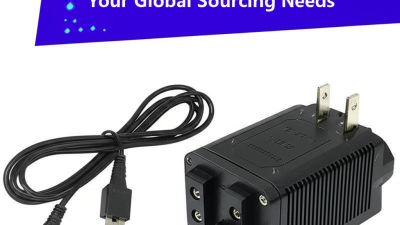
In consumer electronics, these converters are ubiquitous. They power devices like smartphones, laptops, and televisions. For instance, a typical smartphone charger includes an AC-DC converter to ensure safe operation. The rise of e-commerce has significantly increased demand for these converters in efficient power supplies, with reports indicating a 25% growth in user requirements annually. However, not all converters are created equal. Efficiency levels vary, leading to potential energy losses that could be addressed.
In industrial settings, AC-DC converters are employed in machinery and automation systems. The integration of Voltage Converter Transformers enhances performance in such applications. Yet, challenges remain. Fluctuations in power quality can affect converter reliability. Organizations must focus on improving design and implementing quality control measures to mitigate these issues. The balance between efficiency and reliability continues to be a key area for innovation in this field.
Maximizing Your Power Needs: A Comprehensive Guide to Efficient Voltage Converters and Their Benefits
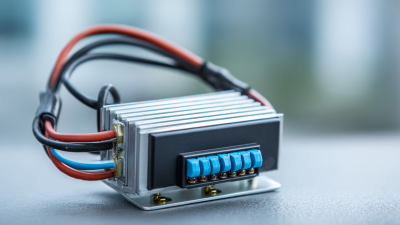
When it comes to meeting power requirements effectively, understanding the characteristics of voltage converters is essential. These devices primarily operate in two modes: "active" and "passive." The choice between these modes can significantly influence the efficiency of voltage conversion, particularly in applications requiring a stable power source. By integrating the I/V converter and transformer into a single unit, a voltage converter can deliver precise input and output values, which is crucial for maintaining the integrity of sensitive electronic components.
The versatility of output signals is another advantage of utilizing a voltage converter. Whether an application demands AC or DC signals, these converters can adapt accordingly, making them suitable for a wide range of electronic systems. Users can connect the input coil through either PCB soldering or flexible wire, allowing for flexibility during installation. This flexibility not only simplifies the integration process into existing systems but also ensures that users can select the best fit for their specific needs.
Understanding these features helps in maximizing your power needs effectively. By choosing the right mode and configuration for your voltage converter, you can enhance the operational efficiency of your electronic devices. This strategic approach not only optimizes performance but also contributes to the longevity and reliability of your systems in demanding environments.
FAQS
They are vital for power supplies and battery chargers. Many modern electronic devices depend on this technology.
They use diodes in the rectification process. Diodes allow current to flow in one direction.
Efficiency can range from 80% to 95%. Higher efficiency means less energy loss and cost savings.
Managing heat is crucial for efficiency. Excessive heat can decrease component lifespan and overall performance.
Capacitors help smoothen the DC output after rectification. They are important for stable operation.
Over time, component quality can degrade. Regular maintenance is essential to maintain performance.
Ripple voltage refers to fluctuations in DC output. Maintaining low levels improves device reliability.
Design challenges include heat dissipation and ensuring high efficiency. Small oversights can affect performance.
Converters must adapt to varying input voltages. Significant loss in output quality can occur without proper design.
Conclusion
An AC-DC converter is an essential device that transforms alternating current (AC) into direct current (DC), playing a crucial role in modern electronics. The basic principles of AC-DC conversion involve rectification, where the AC waveform is altered to produce a usable DC signal. There are various types of AC-DC converters, each tailored for specific applications, which range from powering consumer electronics to industrial equipment.
Key components, such as transformers, diodes, and capacitors, work together to ensure effective conversion. The operation process includes steps like input, rectification, filtering, and output stabilization. Efficiency and performance factors significantly influence the design and application of AC-DC converters, making them vital in various technology sectors, including renewable energy systems and electric vehicles. Overall, the versatility and functionality of AC-DC converters underpin their widespread use in today’s technological landscape.