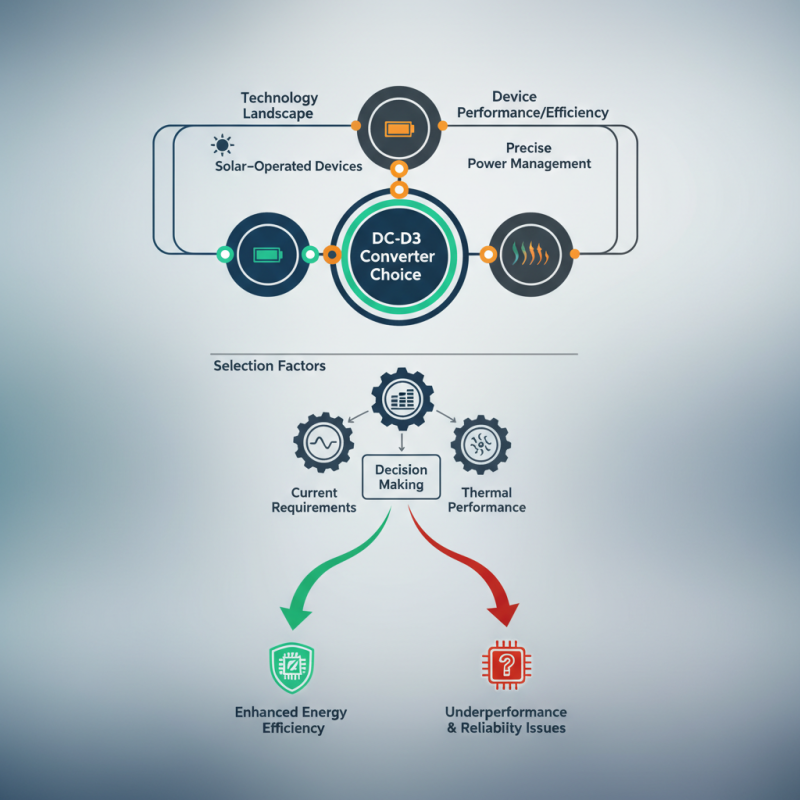
In today’s fast-moving tech world, picking the right Dc-Dc Converter is more important than ever for keeping things running smoothly and efficiently. I’ve read comments from experts like Dr. James Smith over at Power Solutions Inc., who reminds us that 'Choosing the right DC-DC Converter can really make or break the reliability of a device.' That hits home, especially in industries where precise power management isn’t just a bonus — it’s essential.
A good DC-DC converter doesn’t just boost energy efficiency; it also makes your devices perform better overall. Think about solar setups or battery-powered gadgets — in these cases, how you convert and manage power really matters. The right converter ensures everything works seamlessly, even when conditions aren’t perfect. But, honestly, picking the right one isn’t exactly a walk in the park. You’ve got to consider things like output voltage, how much current you need, and even how well it handles heat — it can get pretty complicated.
Plus, with so many options out there, each one has its perks and pitfalls. The real challenge is matching each converter’s specs with what your specific project actually needs. Miss the mark, and you might end up with a device that underperforms or, worse, isn’t reliable. That’s why it’s so important to really understand both the technical side and what your application demands. Making an informed choice takes a bit of research, but it’s worth it to avoid headaches down the line.
Understanding DC-DC Converters: A Comprehensive Overview
DC-DC converters are essential in various applications. They convert one DC voltage level to another with high efficiency. Understanding these devices is crucial for engineers and designers.
A key aspect of DC-DC converters is their efficiency. High efficiency minimizes energy loss during conversion. This is particularly important in battery-operated devices. Even small efficiency gains can extend battery life significantly.
Tips for selecting the right converter include checking the input and output voltage requirements. Ensure the converter matches your application's power ratings. Also, consider thermal performance. Overheating can reduce lifespan and reliability.
It's easy to overlook factors like sizing and layout. A poorly designed layout may lead to noise and inefficiencies. Testing different configurations can reveal unexpected issues that affect performance. Engage in thorough troubleshooting to optimize your design.
Types of DC-DC Converters and Their Applications
DC-DC converters play a critical role in various applications. They transform input voltage levels, providing the necessary output for devices, from consumer electronics to industrial machinery. For instance, isolated converters are widely used in medical devices due to their ability to provide safety and prevent noise. Data from MarketsandMarkets indicates that the global DC-DC converter market is projected to reach $10.5 billion by 2026, underscoring their importance in modern electronics.
Types of DC-DC converters include buck, boost, and buck-boost converters. Buck converters step down voltage while maintaining high efficiency, ideal for battery-powered devices. Boost converters, on the other hand, increase voltage, making them suitable for applications requiring higher output power. According to a report by Mordor Intelligence, boost converters are gaining traction in renewable energy applications. They are essential for maximizing energy harvest from solar panels. Moreover, buck-boost converters offer versatility, as they can either raise or lower voltage. This adaptability is crucial in applications with varying input conditions.
Understanding the specific needs of your application is vital. Every converter type has distinct advantages and limitations. For example, while a buck converter is efficient, it may not suit every scenario. Engineers must carefully assess requirements to select the best converter. Balancing efficiency, size, and cost can be challenging. Additionally, considerations for thermal management and potential electromagnetic interference must be addressed. The right choice influences overall system performance and reliability.
Why Choose the Best DC-DC Converter for Your Application? - Types of DC-DC Converters and Their Applications
| Type of DC-DC Converter | Efficiency (%) | Input Voltage (V) | Output Voltage (V) | Typical Applications |
| Buck Converter | 90-95 | 12-48 | 3.3, 5, 12 |
Power Supply for RF devices, microcontrollers |
| Boost Converter | 85-90 | 3-15 | 12, 24, 36 | LED drivers, battery-powered devices |
| Buck-Boost Converter | 80-90 | 5-30 | 5, 15, 24 | Power management in battery-operated devices |
| Isolated Converter | 85-95 | Wide range | Customizable | Data communications, medical equipment |
Key Factors to Consider When Selecting a DC-DC Converter
When selecting a DC-DC converter, several key factors warrant careful consideration. First, input and output voltage range is crucial. Ensure the converter can handle your specific voltage requirements. It should also match the power needs of your application. An appropriate choice can prevent overheating or system failure.
Efficiency is another vital factor. Higher efficiency means less energy wasted as heat, which translates to better performance. A converter with low efficiency can affect battery life and lead to inadequate power supply. Pay attention to thermal management. This can make or break your system’s reliability.
Size and form factor also matter. Check dimensions and weight to ensure compatibility with your layout. A compact converter can save space but may come with trade-offs in thermal performance. Evaluate these trade-offs carefully. Moreover, consider environmental conditions. Dust, moisture, and extreme temperatures can impact the longevity and functionality of your device. Understanding these elements allows for better decision-making in your application.
Why Choose the Best DC-DC Converter for Your Application?
This chart illustrates the efficiency ratings of different DC-DC converters based on their input-output specifications. The data shows how efficiency varies based on different load levels, which is a crucial factor in selecting the right converter for your application.
Efficiency and Performance Metrics of DC-DC Converters
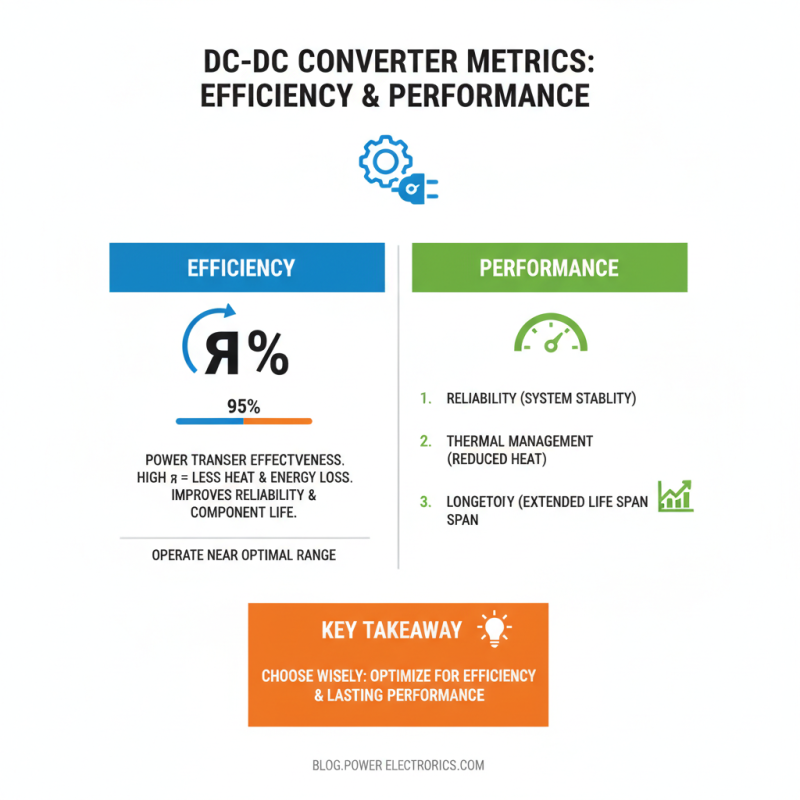
When selecting a DC-DC converter, efficiency and performance metrics play critical roles. Efficiency is a measure of how effectively the converter transfers power. High efficiency reduces heat generation and energy loss. This leads to a more reliable system and longer component life. It’s crucial to choose converters that operate close to their optimal efficiency range.
Performance metrics involve several factors, including load regulation and transient response. Load regulation indicates how well a converter maintains output voltage despite varying loads. A stable output minimizes fluctuations. Transient response measures how quickly the converter reacts to sudden changes in load. A sluggish response could impact sensitive electronics.
Tips: Check efficiency ratings under various loads. Look for converters that excel in load regulation. Always test real-world performance before finalizing your choice. Consider using simulation tools to model your application. They can reveal potential issues early. Don't overlook thermal performance; managing heat is essential for long-term reliability. Choose wisely to enhance system performance and durability.
Common Applications and Use Cases for DC-DC Converters
Dc-Dc Converters are vital in various applications. They efficiently convert one DC voltage level to another. This is essential for powering devices in automobiles, industrial equipment, and renewable energy systems. In electric vehicles, for example, a DC-DC converter steps down the high voltage of the battery to a usable level for low-voltage electronics. This process enhances efficiency and prolongs battery life, ultimately improving the vehicle's performance.
Moreover, DC-DC converters play a crucial role in portable electronics. Many smartphones and laptops require different voltage levels for components. A compact DC-DC converter can provide these levels, ensuring optimal performance without overheating. However, selecting the right converter isn't always straightforward. Users often overlook the impact of inefficiency or voltage fluctuations, which can lead to device failure or shorter lifespans. Careful consideration of these factors can help avoid costly errors.
In renewable energy applications, DC-DC converters support solar panels by adjusting voltage for storage in batteries. This capability allows for improved energy management. Yet, relying solely on size and price can be misleading. Some smaller converters may not handle the load effectively, while inexpensive options might fail under heavy use. Evaluating efficiency ratings and thermal performance becomes crucial in making a reliable choice.
Troubleshooting and Maintenance Tips for DC-DC Converters
When dealing with DC-DC converters, troubleshooting and maintenance are crucial. Industry reports indicate that improper installation accounts for nearly 30% of early failures in power converters. Ensuring the correct voltage and current specifications are met is vital. Overvoltage can damage sensitive components, leading to a complete system failure. Always refer to the technical specifications to prevent such issues.
Regular inspection can extend the lifespan of DC-DC converters. Dust accumulation and poor ventilation can lead to overheating, significantly affecting performance. A study showed that maintaining optimal thermal conditions improves efficiency by 15%. Additionally, using thermal paste when necessary can help in better heat dissipation.
Common signs of trouble include unusual noises or output fluctuations. These symptoms should never be ignored. Addressing these early can save time and cost. Documentation on troubleshooting can be sparse, making it essential to develop a reliable maintenance routine. Understanding the role of the Converter Transformer in this process is equally important. An efficient converter ensures reliability across applications, ultimately enhancing overall system performance.
Future Trends in DC-DC Converter Technology and Innovation
The landscape of DC-DC converter technology is evolving rapidly, driven by the rise of renewable energy and electric vehicles. According to a recent report by ResearchAndMarkets, the global DC-DC converter market is projected to grow at a compound annual growth rate (CAGR) of 6.3% from 2023 to 2030. Innovations in efficiency and form factor are becoming crucial as applications demand greater power density.
Recent trends indicate that Voltage Converter Transformers are becoming more compact and lightweight. These advancements are essential for applications in portable electronics and automotive sectors. Companies are exploring advanced materials and designs, enabling converters to operate at higher frequencies. However, these improvements can also lead to increased electromagnetic interference, which poses a challenge for designers.
Moreover, designing for reliability remains a key focus. While new technologies promise improved performance, they can introduce complexities in circuit design. Ensuring long-term reliability in various operating conditions requires careful consideration. As the demand for energy-efficient solutions grows, designers must balance innovation with practical usability.
Power Your Devices Anywhere: The Ultimate Guide to Voltage Converters for Efficient and Stable Performance
In today’s digital age, having reliable power for your devices while on the move is essential. Voltage Converters play a pivotal role in ensuring that your devices operate efficiently and stably, regardless of their power requirements or the regions in which they are used. These converters function in two distinct modes: "active" and "passive," allowing users to adapt to various power scenarios. Whether you need an alternating current (AC) or a direct current (DC) supply, a good voltage converter can deliver the right output to keep your devices running smoothly.
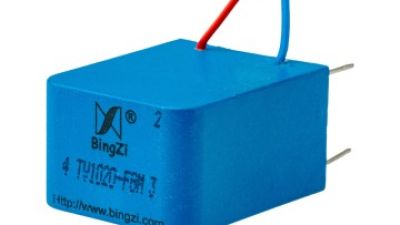
The design of modern voltage converters is particularly innovative, with an integrated I/V converter and transformer combined into a single unit. This integration not only simplifies usage but also guarantees fixed input and output voltage values, enhancing both performance and safety. Users can connect the input coil in two ways—either through printed circuit board (PCB) soldering or with flexible wires—providing versatility depending on the specific application. These features make voltage converters an indispensable tool for anyone looking to power their devices efficiently anywhere, ensuring that the power supply remains steady and reliable no matter the environment.
FAQS
: They convert one DC voltage level to another. They power devices in various sectors, including automotive and renewable energy.
Buck, boost, and buck-boost converters are three types. Each has unique applications and efficiencies.
A buck converter steps down voltage while maintaining high efficiency. It's ideal for battery-powered devices.
Boost converters increase voltage output. They're vital in renewable energy applications, especially with solar panels.
Each converter has distinct advantages and limitations. The wrong choice can lead to inefficiency and device failure.
Users often underestimate voltage fluctuations or inefficiency impacts. These can shorten device lifespans or fail performance.
Technology is advancing with a focus on compact design and efficiency. This is crucial for portable electronics and automotive applications.
While innovation improves performance, it can complicate circuit design. Reliability in various conditions must not be ignored.
Smaller converters might struggle to handle loads effectively. Size and price alone should not dictate the choice.
Increased compactness may lead to higher electromagnetic interference levels. Designers face challenges in minimizing this impact.
Conclusion
DC-DC converters are vital components in numerous electronic applications, offering a range of functionalities from voltage regulation to power management. Understanding the different types of DC-DC converters and their specific uses helps in selecting the optimal solution for various projects. Key factors to consider include efficiency, size, load conditions, and input-output requirements, which collectively influence the performance of these converters.
Efficiency and performance metrics play a crucial role in the effective application of DC-DC converters, particularly in energy-sensitive contexts. Common applications span consumer electronics, automotive systems, and renewable energy setups, reflecting the versatility of these devices. To ensure longevity and reliability, regular troubleshooting and maintenance are essential. As technology advances, future trends are likely to introduce innovative designs and improved efficiency, further enhancing the role of DC-DC converters in modern power solutions.