Picking the right Hall Current Sensor can feel pretty overwhelming sometimes, right? Honestly, a lot of engineers are right there with you, trying to figure out which one fits best. I remember Dr. John Smith from CurrentTech Inc. once said, 'Choosing aHall Effect Current Sensor really boils down to understanding what your project actually needs.' That stuck with me because it highlights how crucial it is to tailor your choice rather than going for the fanciest or most popular sensor out there.
Now, here’s the thing: every project has its quirks. Some sensors are better for high-precision tasks, others are super compact, and then there’s environmental resilience—like, will it work in extreme heat or in humid conditions? It can honestly get confusing trying to navigate all these options. Each sensor has its own quirks, so you’ve gotta match them up with what you actually need.
And don’t forget, a lot of folks overlook how important calibration is or whether the sensor will play nice with their existing systems. If you pick one without checking those things, you could end up with readings that are way off, which is a pain. Sometimes, taking a bit of extra time to do your homework really pays off—it’s all about finding that perfect fit. And hey, sometimes that means going back and rethinking your original assumptions. It’s all part of the process, really.
Understanding Hall Current Sensors: An Overview of Their Operation
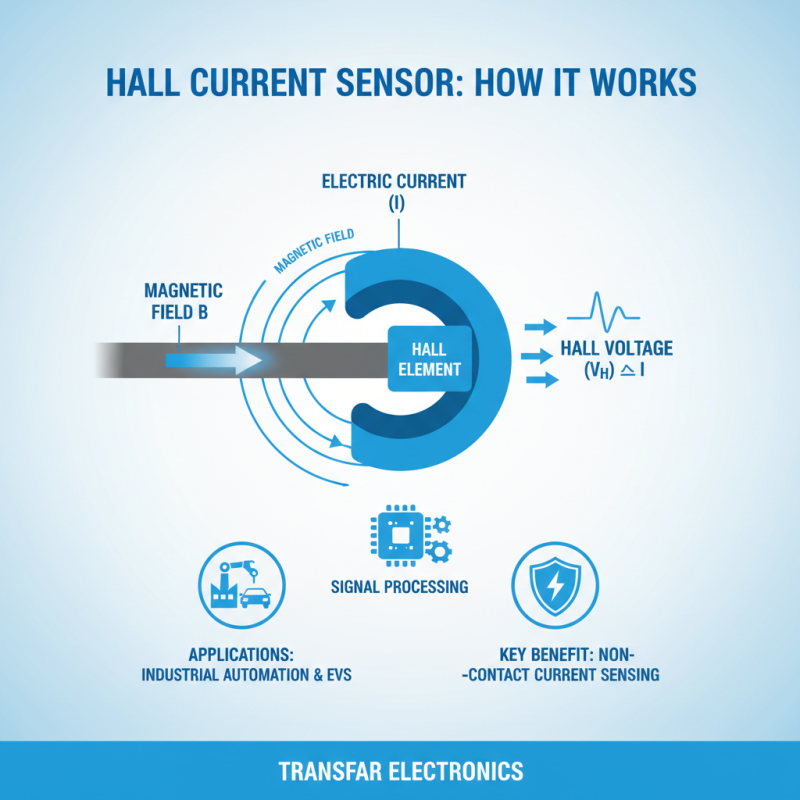
Hall Current Sensors operate based on the Hall effect. When an electric current passes through a conductor, a magnetic field is produced. This is fundamental to their functionality. It enables the sensor to detect the current without direct electrical contact. In applications like industrial automation and electric vehicles, accurate sensing is crucial.
According to industry data, Hall Current Sensors have gained immense popularity due to their non-invasive nature. They provide accurate measurements with minimal heat generation. Reports indicate that sensor accuracy can reach up to 99%. However, not all sensors meet these standards. Some may have calibration issues that impact performance in real-world applications. Relying solely on specifications can be misleading.
Selecting the right Hall Current Sensor involves understanding the project's specific requirements. Factors like operating range and resolution are vital. Some sensors may not perform well in extreme conditions. Awareness of these limitations is crucial for engineers. Balancing performance and cost is often a complex decision. So, careful consideration and testing are essential steps.
Key Specifications to Consider When Selecting Hall Current Sensors
When selecting a Hall current sensor, there are several key specifications to consider. One of the primary factors is the measurement range. Many sensors handle currents from a few milliamps to several hundreds of amps. Industry reports indicate that nearly 70% of applications require sensors that can measure up to 50A. If your project involves higher currents, you may need a more specialized sensor.
Another crucial specification is the sensor's accuracy. A typical Hall current sensor features accuracy levels ranging from 1% to 5%. Projects demanding precise measurements, especially in automation or power conversion, benefit from sensors with lower error margins. The trade-off between precision and cost often requires careful thought.
The response time is another important aspect. Sensors with faster response times enable quicker reactions in dynamic systems. Some high-performance Hall current sensors can respond in microseconds. Balancing speed and reliability can be a challenge. Sometimes, focusing too much on one specification can lead to an oversight of others. Consider testing different options to find a well-rounded sensor that matches your project’s requirements.
Current Measurement Range: Determining Your Project Needs
When selecting a hall current sensor, assessing your project's current measurement range is crucial. Sensors come with varying capacities. Understanding the specific needs can lead to a better choice. Do you require low, medium, or high current measurement? Each range serves a different purpose. Misestimating the needs can lead to project failure.
Tips: Gather insights from user manuals. Look for specifications that highlight measurement ranges. Make a list of all current levels you expect to encounter.
Consider the environment where the sensor will operate. Is it a high-temperature area? Can it handle interference from other equipment? Effectively, these factors can impact precision. Turning a blind eye to them may lead to inaccurate readings.
Tips: Review case studies similar to your project. Identify the problems they faced and how they resolved them. Sometimes, the best lessons come from others’ mistakes.
Accuracy and Sensitivity: Finding the Right Balance in Sensor Selection
When selecting a Hall Effect Dc Current Sensor, accuracy and sensitivity are paramount. Accuracy refers to how close the sensor's reading is to the actual current flow. In contrast, sensitivity indicates the smallest change in current that the sensor can detect. Finding the right balance between these two parameters can be challenging. A sensor with high sensitivity may pick up noise, affecting accuracy. A sensor with high accuracy may not respond to small current changes.
Industry reports suggest that sensors typically operate with an accuracy range of ±0.5% to ±3%. A sensor with a sensitivity of 1 mA can detect fluctuations effectively but could struggle with interference. In practical applications, engineers often face a trade-off. For example, a sensor used in a power monitoring system needs to be both sensitive and accurate. If the sensor isn't calibrated properly, it can lead to significant errors in readings.
Implementation of noise filtering techniques can help improve accuracy. However, it adds complexity to the sensor design. Calibration is equally vital. Regularly checking the sensor can mitigate degradation over time. Understanding these factors can significantly impact your project's success. It’s essential to weigh the pros and cons when choosing the right Hall Effect Dc Current Sensor for your design.
Hall Current Sensor Accuracy and Sensitivity Comparison
Temperature Range and Stability: Ensuring Reliable Performance
When choosing a Hall current sensor, the temperature range and stability are crucial. Sensors can behave differently at varying temperatures. A wide temperature range ensures your sensor works under different environmental conditions. For indoor projects, this might not be a major concern. However, outdoor applications often face extremes. Consider how these fluctuations could affect your readings.
Stability is another key factor. A sensor may perform reliably at room temperature but struggle elsewhere. Some may drift after prolonged use. Testing under your specific conditions is essential. Cheap sensors might offer a wide range, but their long-term stability could be questionable. It’s worth spending time evaluating this aspect. Use accurate data to inform your decisions.
Reflect on the future of your project. Will the sensor be subjected to harsh conditions? Will it be used continuously? These questions matter. A stable, robust sensor saves time and headache later on. Ultimately, the right choice can enhance your project's performance significantly. Keep these considerations in mind as you choose your Hall current sensor.
Integration Considerations: How to Incorporate Sensors into Your System
Choosing the right hall current sensor for your project requires careful consideration of integration aspects. The sensor must seamlessly fit into the existing system. Look at factors like power supply requirements and communication protocols. Ensuring compatibility can save time and resources. In practical terms, many projects fail due to overlooked integration issues.
When considering integration, think about the physical layout. Sensors often need to be mounted in challenging spaces. Pay attention to the sensor’s dimensions and housing. A compact design can make a huge difference. According to industry reports, 40% of project delays arise from miscalculating space requirements for sensors and wiring.
Tips: Always prototype your design before full implementation. This will help you identify unforeseen challenges. Additionally, maintain clear documentation on sensor placement and wiring. Lastly, ensure your team is trained on troubleshooting integration issues. Using simulations can also provide insights into potential integration problems. Don't underestimate these steps—they can greatly enhance your project's success.
Cost vs. Performance: Evaluating the Best Options for Your Budget
When choosing a Hall current sensor, cost and performance are key factors. Many projects operate under strict budget constraints. A report by Electronics Weekly shows that nearly 70% of engineers prioritize cost over other factors during the selection process. However, lower cost often comes at the expense of accuracy and reliability. For instance, budget sensors might offer limited operational ranges, which can lead to suboptimal performance in critical applications.
It's crucial to understand the trade-offs involved. A sensor that appears affordable may require additional calibration or compensation, increasing overall project costs. According to a study from IEEE, sensors with better accuracy can reduce faults by up to 30%. Over time, this can lead to significant savings. Therefore, evaluating data sheets is essential. Look for sensors with proven performance metrics, even if they carry a higher initial price.
Think about your specific needs. For some projects, low power consumption is paramount. In contrast, other projects might demand high-speed data processing. Relevant specifications can vary widely, affecting your selection process. A carefully chosen Hall Sensor Current Measurement tool can make a difference. Balancing cost and performance is a challenge, but making informed decisions can lead to long-term benefits.
How to Choose the Right Hall Current Sensor for Your Project? - Cost vs. Performance: Evaluating the Best Options for Your Budget
| Sensor Model | Measurement Range (A) | Accuracy (%) | Response Time (µs) | Supply Voltage (V) | Price ($) |
| Model A | -10 to 10 | 1 | 100 | 5 | 15 |
| Model B | -20 to 20 | 0.5 | 80 | 12 | 25 |
| Model C | -30 to 30 | 1.5 | 60 | 10 | 20 |
| Model D | -15 to 15 | 2 | 120 | 5 | 10 |
| Model E | -50 to 50 | 0.2 | 50 | 15 | 30 |
Enhancing Industrial Efficiency: Insights from Industry Reports on HS45-A-P1 Current Sensor/Transducer Applications
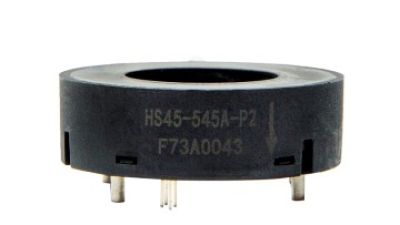
The demand for enhanced industrial efficiency has driven a surge in the development of advanced current sensors, particularly the HS45-A-P1 series. These sensors leverage the open loop effect for precise electronic measurement of both direct and alternating currents, accommodating a variety of operational conditions including pulsed and irregular waveforms. According to recent industry reports, the adoption of high-performance current transducers like the HS45-A-P1 is poised to increase significantly, driven by the need for accurate monitoring and control in industrial applications.
In sectors such as manufacturing, automotive, and renewable energy, the ability to measure electrical currents with exceptional reliability is crucial. Industry data indicates that the integration of modern sensors enhances system efficiency, resulting in reduced energy consumption and lower operational costs. By employing advanced current sensing solutions, companies can achieve greater precision in their processes, thus maximizing productivity. Reports suggest that industries adopting these technologies have observed up to a 15% improvement in overall performance metrics.
Moreover, the versatility of the HS45-A-P1 series allows it to function effectively in isolated conditions, making it an ideal solution for applications where traditional sensors may fail. As industries continue to evolve towards greater automation and data-driven decision-making, the significance of robust current measurement solutions becomes ever more pronounced. The insights derived from these applications underscore the critical role that current sensors play in enhancing operational efficiency across various sectors.
FAQS
: Accuracy measures how close a sensor's reading is to the actual current. Sensitivity detects the smallest current change.
High sensitivity can introduce noise, reducing accuracy. Conversely, high accuracy may fail to catch small current changes.
Sensors generally operate within an accuracy range of ±0.5% to ±3%. This can vary by sensor type.
Noise filtering can enhance accuracy, but it complicates the sensor's design and implementation process.
The temperature range determines how a sensor performs under different conditions. It's vital for outdoor applications.
Stability ensures consistent performance; poor stability can cause readings to drift after prolonged use.
Overlooking integration factors like power supply and layout can lead to project failures and delays.
Prototyping helps identify unforeseen challenges early, saving time and resources in the long run.
Assess the sensor's durability and stability; it must function reliably under extreme conditions.
Clear documentation of sensor placement and wiring aids troubleshooting and enhances overall project success.
Conclusion
Choosing the right Hall Current Sensor for your project requires a thorough understanding of their operation and key specifications. Start by assessing the current measurement range that aligns with your project needs, ensuring the sensor can accurately measure the expected currents. Balance is crucial; consider both accuracy and sensitivity to achieve optimal performance in your application.
Additionally, examine the temperature range and stability of the Hall Current Sensor to guarantee reliable operation under varying conditions. It’s also essential to think about integration considerations, ensuring that the sensor can be effectively incorporated into your system. Finally, evaluate cost versus performance to find the best options within your budget, ensuring that you don’t compromise on quality while staying financially conscious.