TransFar Electronics

Picking the right Switching Power Supplyreally matters if you want everything to run smoothly, no matter what project you're working on. Industry pros will tell you the same—it's super important. I mean, take John Smith from PowerTech Solutions; he’s a well-known engineer who once said, "The right Power Supply can really make or break your project’s success." That just goes to show how much thought should go into choosing the right one.
When you're hunting for a Switching Power Supply, there are a few things you should keep in mind—like how efficient it is, what kind of load it needs to handle, and the size or form factor. Not every model out there is perfect for every situation. Some might be overkill, with too much capacity, while others might fall short on efficiency. So, it’s really important to sit back and think about what you actually need, and where you’re gonna be using it.
And honestly, with so many options floating around, it can get pretty overwhelming, right? I’ve seen folks make snap decisions without really digging into the details, and that’s never ideal. Learning from past mistakes? Totally a smart move. Make sure whatever you pick matches both your current requirements and what you might need down the line. Striking a good balance between features and price will save you headaches and give you better bang for your buck in the long run.
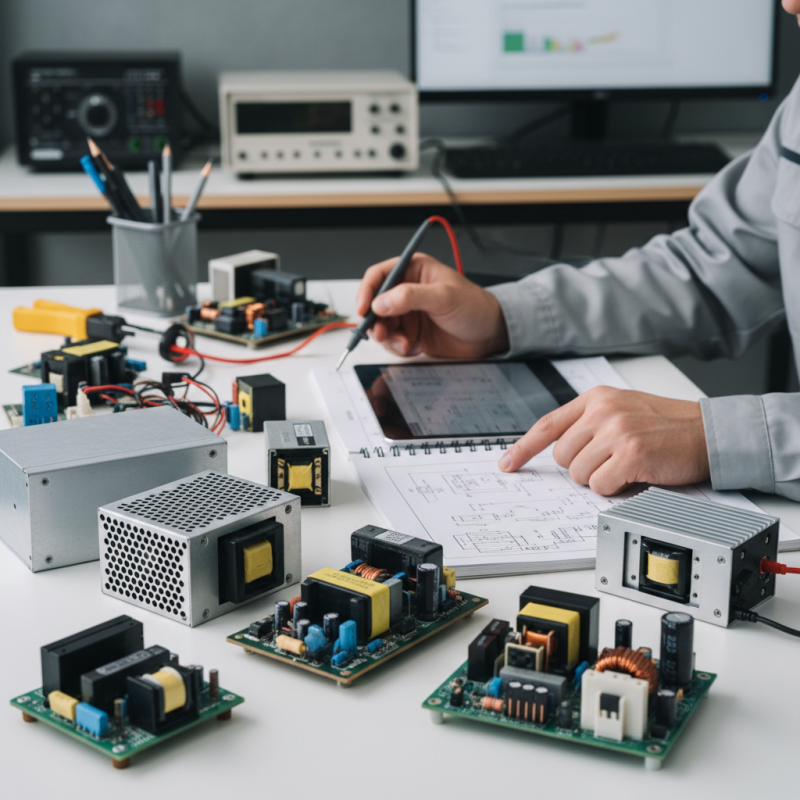
When selecting a switching power supply, understanding the basics is crucial. Switching power supplies (SMPS) are vital in modern electronics. They convert electrical power efficiently. The global market for these supplies is projected to reach $22 billion by 2026, reflecting ongoing demand. Their compact design further contributes to their popularity in consumer devices.
Tips: Assess the efficiency rating of the power supply. A higher efficiency means less heat and energy loss, often above 85%. Higher quality units often use top-grade components, ensuring reliable operation over time.
Switching Transformers play an essential role in these systems. They adjust voltage levels and provide electrical isolation. Understanding the parameters, such as output voltage, load current, and power ratings, helps in making informed choices. However, not all units are created equal. Some models may fail under specific loads or environmental conditions, so testing under real-world scenarios is a must.
Tips: Check for thermal management features. Proper cooling solutions can extend the life of the power supply. Invest in units that offer comprehensive protection against over-voltage and short circuits. Prioritizing these factors can prevent costly failures and improve overall system reliability.
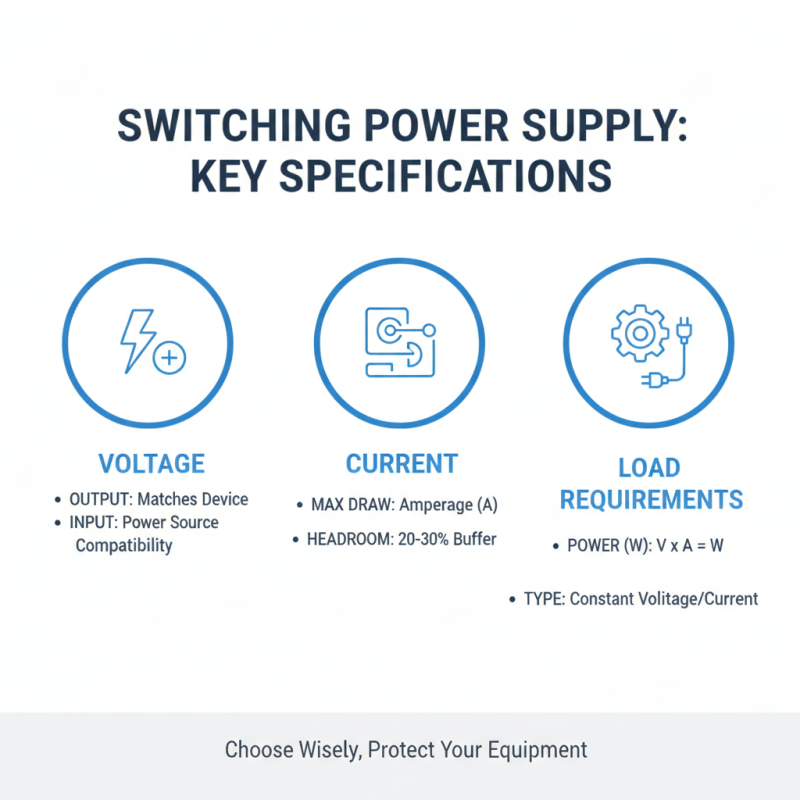
Choosing the right switching power supply (SPS) requires careful consideration of several key specifications. Voltage is a primary factor. Ensure the output voltage matches your device’s requirements. Too high or too low can damage your equipment. Checking the input voltage range is just as crucial. It determines what power source you can use effectively.
Current specifications play a vital role as well. The SPS must be able to deliver sufficient current for your application. Underestimating this can lead to underperformance or even failure. Users often overlook the current requirements, leading to potential issues. Understanding load requirements is equally important. It reflects the total power your devices need during operation. Failing to account for this can result in an inadequately powered system.
It’s also wise to consider efficiency ratings. Higher efficiency means less energy wasted as heat. Yet, many products may state high efficiency without real-world validation. Pay attention to reviews and user feedback. They can provide insights into performance and reliability. Many choices exist in the market, but not all meet expectations. Take your time to research and evaluate your options carefully. This diligence can prevent future setbacks.
When selecting a switching power supply, understanding efficiency ratings is crucial. These ratings indicate how effectively a power supply converts input power to output power. Higher efficiency means less energy wasted as heat, leading to lower energy costs and longer lifespan for components.
Efficiency ratings are typically expressed as percentages. For example, a power supply with an efficiency rating of 80% converts 80% of input power to usable output. The remaining 20% is lost as heat. It's essential to consider the load at which these ratings apply. Most ratings reflect peak efficiency under specific conditions, which may not represent real-world usage.
Tips to keep in mind:
- Always check the efficiency at various loads. This helps ensure you choose a supply that performs well in your applications.
- Look for the 80 Plus certification. This certification guarantees a minimum efficiency level, providing a reliable benchmark.
- Reflect on your project needs. A high-efficiency power supply may have a higher initial cost, but it can save money over time through reduced power consumption.
Understanding these details enhances your decision-making process. It allows you to find a power supply that meets both performance and energy efficiency needs.
When selecting a switching power supply, safety features should be a top priority. Overvoltage protection shields your devices from voltage spikes that can cause damage. It's crucial to ensure this feature is present, especially if the equipment being powered is sensitive. The risk of electrical faults increases without these protections.
Overcurrent protection prevents excessive current from flowing through the power supply. This feature is vital for avoiding component burnout. It's a common issue that can lead to costly repairs or replacements. Be cautious; some models may not offer adequate overcurrent safeguards.
Thermal protection helps to regulate temperature. Excessive heat can shorten the lifespan of electronic components. Look for power supplies with built-in fans or heat sinks. However, the efficiency of these cooling systems can vary. It's not always clear how well these features perform in real-world conditions. Understanding these critical safety features is essential for making a wise choice.
When selecting a switching power supply, form factors play a crucial role in ensuring your setup runs smoothly. The size and configuration of the power supply must fit your specific application. For example, a compact configuration may be ideal for confined spaces, while larger setups can accommodate more powerful options. Industry reports indicate that nearly 40% of power supply failures stem from incorrect sizing. This highlights the importance of careful measurement and consideration.
One key aspect is understanding the dimensions of your equipment. Many applications require desktop form factors, while others demand modular types. Each form factor comes with its unique advantages. For instance, modular designs often allow for easier upgrades. Keep in mind that thermal management is vital; ensure that your chosen form factor can dissipate heat effectively. "Switching Transformer Quotes" also emphasize the efficiency of various designs, which often contribute to a longer lifespan for your components.
Tip: Always assess the layout of your setup before making a choice. A poorly configured power supply can lead to operational issues. Additionally, consider future needs. Will you need additional power later? Choosing a flexible design now can save you time and money in the long run. Think critically about your options, and don’t overlook the potential for adjustments down the road.
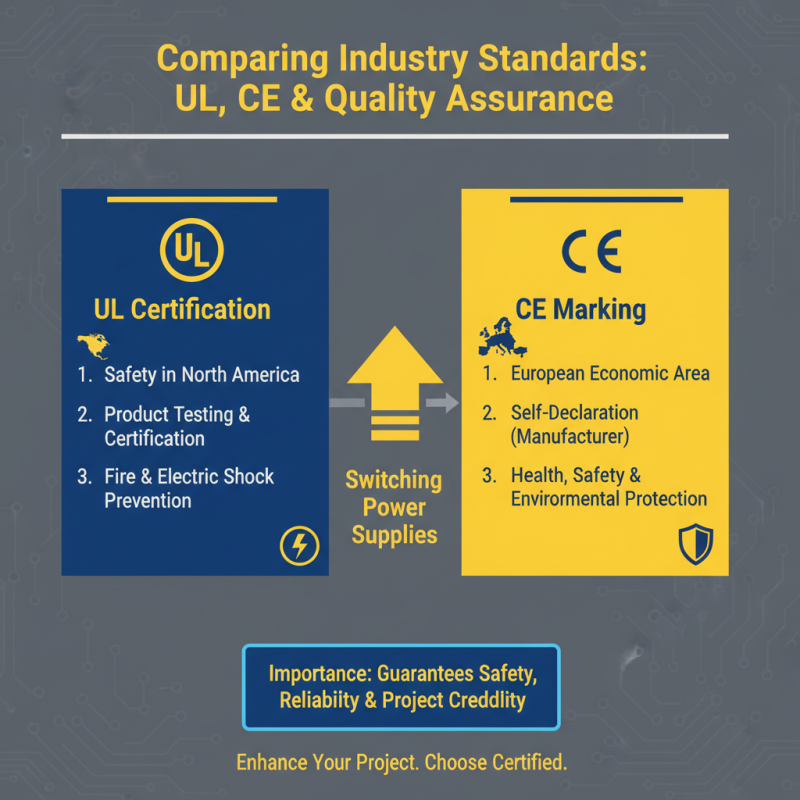
When selecting a switching power supply, understanding industry standards is crucial. UL and CE certifications guarantee safety and reliability. These labels indicate compliance with strict regulations. A power supply with these certifications can enhance your project’s credibility.
UL (Underwriters Laboratories) focuses on electrical safety. It examines products to ensure they do not pose hazards. CE (Conformité Européene) certification verifies compliance with European safety standards. While both are essential, their significance varies by region. You might face challenges if you ignore them. Choosing a power supply without these certifications can lead to unplanned failures.
In a world filled with options, reflect on the source of your components. A reputable Switching Transformer Factory ensures quality. Look for detailed product specifications. Check reviews and user feedback. Understand that even the best standards can't guarantee perfection. Every power supply has its limitations. A thoughtful approach to your selection can lead to more reliable outcomes.
When choosing a switching Power Supply, cost and performance are often at odds. A cheaper unit may initially seem like a great deal. However, if it fails to meet your requirements, the long-term expense can skyrocket. The key is to find a balance between what you can afford and what will perform optimally for your project. Analyzing specifications is crucial. Do not just look at wattage; also consider efficiency ratings and reliability.
You might encounter power supplies with attractive price tags but poor durability. It's easy to overlook user reviews, but they provide valuable insights. Pay attention to recurring issues people report. They can save you from rash decisions. Stability and output quality are essential. An unreliable power supply can lead to damaging fluctuations, negatively impacting sensitive equipment. Always ask yourself: is it worth saving a few bucks if it compromises the overall performance?
Additionally, consider your application needs. A power supply suitable for a hobby project might not suffice for industrial applications. Remember that upfront savings can lead to unexpected costs later, especially if your power supply fails. Strive for a well-informed choice that aligns with your budget, yet does not sacrifice quality, especially regarding the power supply's performance.
: The output voltage must match your device's requirements. Incorrect voltage can damage equipment.
Sufficient current delivery is crucial. Underestimating current needs can lead to underperformance or failure.
Load requirements reflect the total power your devices need. Ignoring this can lead to inadequate power supply.
Efficiency ratings show how well a power supply converts input to output power. Higher ratings mean less energy wasted.
An 80% efficiency rating means 80% of input power is usable, with 20% lost as heat.
Ratings often reflect peak efficiency in specific conditions. Real-world performance can vary.
The 80 Plus certification guarantees a minimum efficiency level. It's a benchmark for reliable performance.
Yes, a high-efficiency supply may have a higher upfront cost but saves money through reduced energy consumption.
Reviews provide insights into performance and reliability. They help identify products that meet expectations.
Overlooking current needs or load requirements can lead to problems. Take time to research options carefully.
Choosing the best Switching Power Supply requires a solid understanding of its fundamental principles and functions. Key specifications such as voltage, current, and load requirements play a crucial role in ensuring compatibility with your system. Additionally, efficiency ratings should be carefully analyzed, as they indicate how effectively the power supply converts input power to usable output, impacting both performance and energy consumption.
Furthermore, safety features like overvoltage, overcurrent, and thermal protection are vital for safeguarding your devices. Considering the form factor is also important, as it affects the physical integration of the power supply within your setup. Moreover, adhering to industry standards like UL and CE can enhance quality assurance, while balancing cost and performance ensures an informed purchase decision within your budget. Making these considerations will lead to a more effective and reliable Switching Power Supply for your needs.