Inquiry
Form loading...
0%

Picking the right Ct Transformer really can make a big difference when it comes to how well your electrical systems perform. I remember John Smith from Power Solutions Inc. once said, “Choosing the correct CT Transformer is key to getting accurate measurements.” His advice has been super helpful for both engineers and tech folks alike.

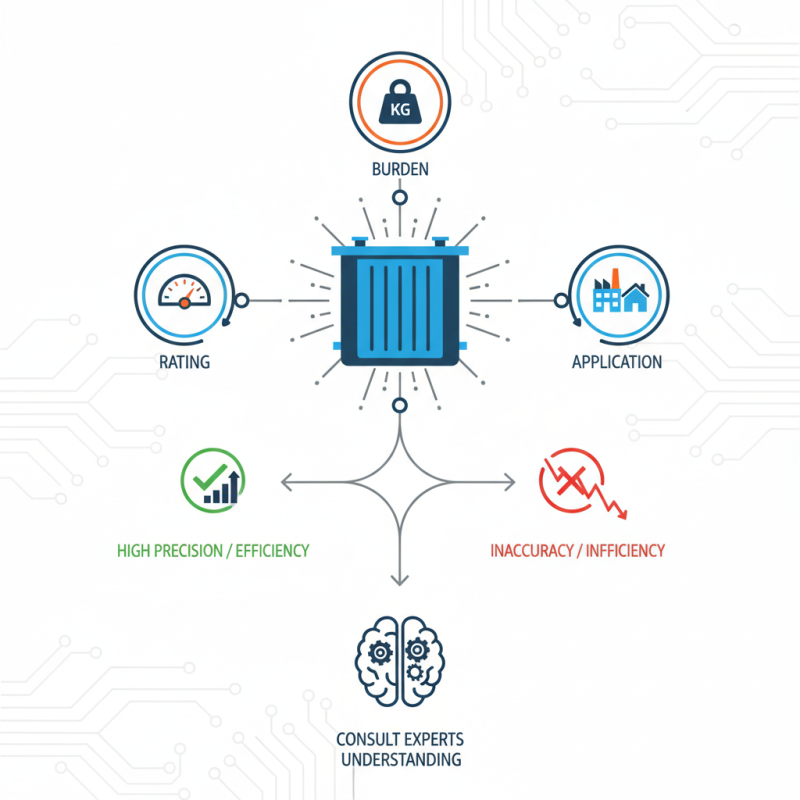
That said, there are quite a few things to consider. You’ve gotta look at the transformer's rating, the burden it can handle, and what you’re actually using it for. For example, a manufacturing plant might need really precise readings, whereas a residential setup probably doesn’t require as much accuracy. It’s all about matching the transformer to your specific needs.

Of course, mistakes happen—people sometimes overlook the load requirements or pick the wrong ratio without realizing it. That can lead to inaccurate measurements or just inefficient performance. So, it’s definitely worth taking your time, reviewing your options carefully, and talking to experts if you need to. When you reflect on these decisions, you’ll end up with a much better understanding of CT Transformers and what they do.
How to Choose the Right Ct Transformer for Your Needs?

Understanding the Basics of Current Transformers (CT)

Current Transformers (CTs) are essential in electrical systems. They help monitor and control current flow. Understanding their basics can significantly impact safety and performance. A CT converts high currents into smaller, manageable values. This conversion allows us to measure electrical parameters accurately.

When choosing a CT, one must consider several factors. The transformation ratio is critical. It defines how much current is reduced. Selecting an incorrect ratio may lead to inaccurate readings. Additionally, pay attention to the CT's burden rating. A CT might perform poorly if connected to a load beyond its capacity. This scenario can lead to overheating and potential failures.

Installation and maintenance are areas where mistakes often occur. Improper connections can lead to hazardous situations. Don't overlook the importance of regular checks. Many users forget this step. Regular maintenance ensures that everything functions correctly and safely. Emphasize knowledge and training in handling CTs effectively. Actual application often reveals gaps in understanding that need addressing.

How to Choose the Right Ct Transformer for Your Needs? - Understanding the Basics of Current Transformers (CT)

Parameter Description Options Typical Applications
Rated Primary Current The maximum current that the transformer can measure accurately. 5A, 10A, 100A Power distribution, Industrial monitoring
Accuracy Class Indicates the precision of the transformer under defined conditions. 0.5, 1.0, 3.0 Metering, Energy monitoring
Burden The load connected to the output of the CT. 5 VA, 10 VA, 15 VA Relay protection, Data logging
Frequency Range The operational frequency range over which the CT performs. 50 Hz, 60 Hz Power system analysis, Harmonic studies
Secondary Output Voltage Voltage level at the output of the CT under rated conditions. 1V, 5V Control systems, Measurement devices

Key Factors in Selecting the Right CT Transformer

How to Choose the Right Ct Transformer for Your Needs?

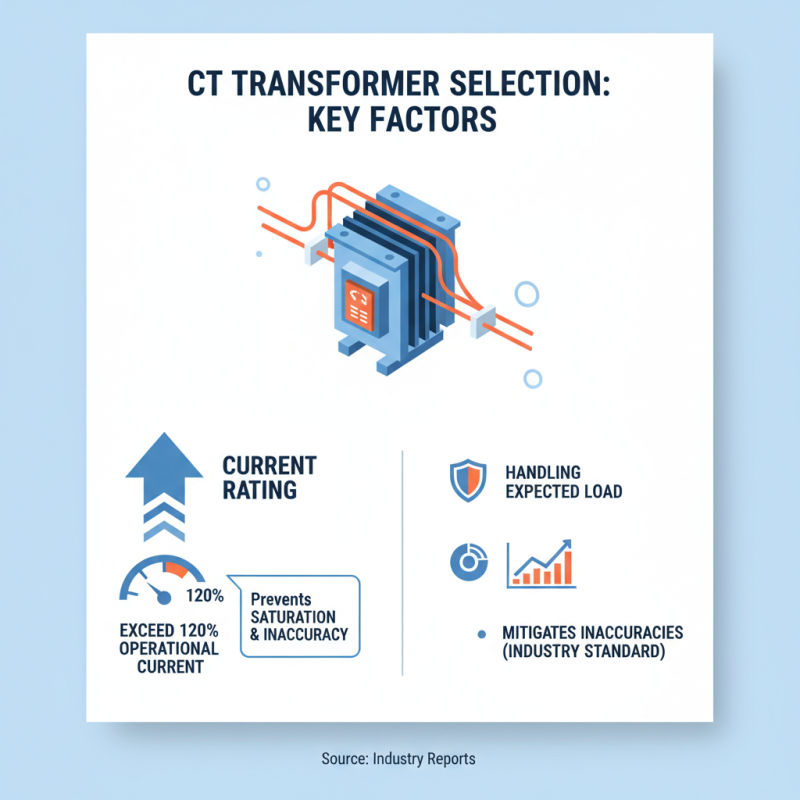
When selecting a CT transformer, understanding key factors is crucial. The primary aspect is the current rating. This ensures that the CT can handle the expected load without saturation. According to industry reports, a transformer needs a rating exceeding 120% of the operational current to mitigate inaccuracies.

Another critical factor is accuracy class. Higher accuracy classes come with an increased cost. Yet, they provide better measurement reliability. For example, a Class 0.5 CT offers a lower error margin than a Class 1 CT. This decision often hinges on application specifics. Systems demanding precise measurements, like revenue metering, require high-accuracy CTs.

Installation environment should also be considered. Ambient temperature affects performance. As temperatures rise, accuracy may dwindle. Selecting models with appropriate thermal ratings is advised. Roughly 30% of failures stem from overlooking environmental factors. Making informed choices here can prevent future issues. Always think critically about these details and their long-term implications.

Analysis of Load Current Requirements for CT Selection

Choosing the right current transformer (CT) involves understanding your load current requirements. Load current refers to the amount of electrical current that devices draw during operation. Accurate knowledge of this current is crucial for selecting an appropriate CT. Too small a transformer can lead to saturation, while an oversized one may be inefficient.

To make an informed choice, begin by assessing your system. Analyze the maximum load conditions. Also, consider the application type. Industrial and commercial setups often have unique needs. It’s essential to examine historical data and estimate future demands. If data is lacking, a conservative approach might be best.

Many overlook the importance of environmental factors. Extreme temperatures or high humidity levels can affect transformer performance. Placement matters too. Ideally, the CT should be close to the load. This minimizes the risk of errors introduced by wire resistance. In the end, ensure that your chosen CT meets both current and safety standards. Thus, avoiding potential pitfalls requires careful thought and sometimes, trial and error.

Evaluating the Accuracy Class of CT Transformers

When selecting a CT transformer, accuracy class plays a vital role. This classification determines how closely the transformer can reproduce the primary current's measurements. Understanding the accuracy rating helps in choosing one that fits your operational needs. Lower accuracy classes might lead to errors in billing or monitoring.

Accuracy classes range from standard values like 0.1 to 3.0. Class 0.1 is excellent for precision. Class 3.0, however, can lead to significant discrepancies in readings. If your application involves heavy usage, aim for a higher accuracy class. If not, a lower one might suffice.

It’s important to evaluate your specific requirements thoroughly. Many users underestimate this aspect. Sometimes, the cheapest option seems best, but mistakes on the line could cost more in the long run. Consider the environment, load conditions, and even potential future changes. Balancing cost with accuracy is tricky; each choice has consequences. Aim for clarity in your selection process and avoid rushing.

Evaluating the Accuracy Class of CT Transformers

Understanding the Burden Ratings for Optimal Performance

How to Choose the Right Ct Transformer for Your Needs?

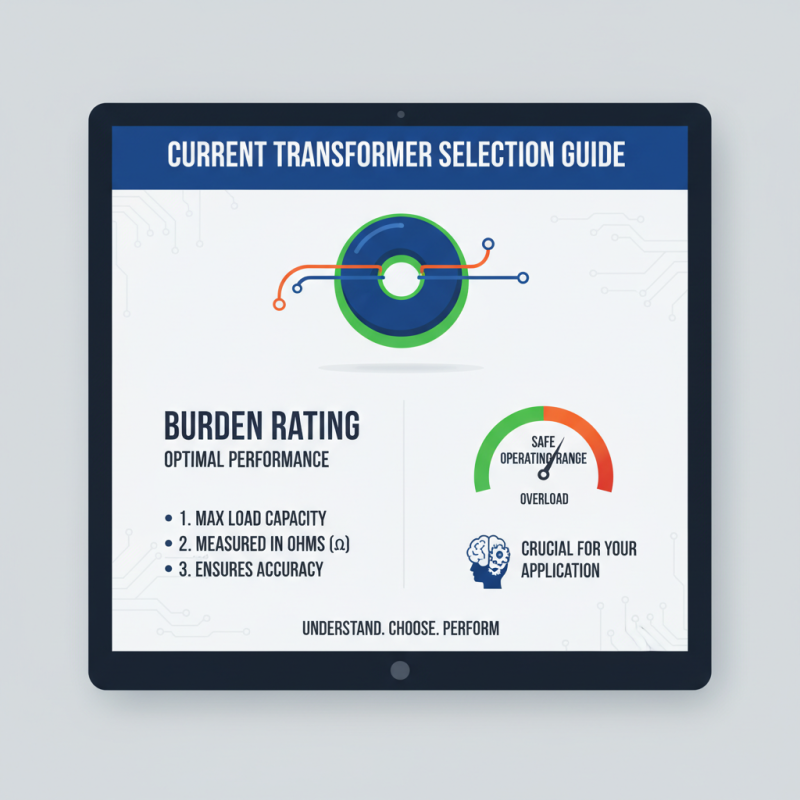
Choosing the right current transformer (CT) is crucial for your application. Understanding burden ratings is a key element in ensuring optimal performance. The burden rating signifies the maximum load the transformer can handle without degrading accuracy. Typically measured in ohms, this rating provides essential insights into safe operating limits.

When selecting a CT, consider the expected load demand. A transformer with a burden rating that exceeds 5 VA (volt-amperes) might be ideal for most applications. However, some reports indicate that excessive burden ratings can lead to inaccuracies. It’s crucial to match the transformer’s burden with the load. Inaccurate measurements can result in costly operational errors.

Tip: Always check the specifications. A common mistake is miscalculating the burden. If the burden is underestimated, the CT's performance suffers. On the other hand, an overestimated burden might cause inefficiencies. Also, carefully analyze your system’s requirements before finalizing your choice. Every detail matters. The wrong CT could lead to more than just poor performance; it might cause safety risks.

The Importance of Mounting Configuration in CT Choices

When selecting a current transformer (CT), the mounting configuration plays a crucial role. The right configuration can influence both performance and ease of installation. Some environments may require wall-mounted solutions, while others may benefit from a panel-mounted option. Understanding your space is key. Often, people overlook this detail and face complications later.

Each mounting type has its own advantages. For instance, a clamp-on CT may offer convenience for temporary setups. However, it might not provide the same accuracy as a permanently installed transformer. Sometimes the simplest choice isn’t the best. It's essential to assess your long-term needs rather than just immediate requirements.

Consider the physical space and layout. Is there enough room for maintenance? Are cables easily accessible? These often-neglected questions can save you time and effort. A thoughtful approach to mounting can smooth out potential operational issues. Don't rush this decision; take your time to reflect on all aspects.

Industry Standards and Regulations Affecting CT Selection

Selecting a current transformer (CT) involves understanding various industry standards and regulations. These guidelines can influence your choice significantly. Different sectors, like power generation and distribution, have unique requirements. Familiarity with these norms helps ensure compliance and operational safety.

For instance, IEC and ANSI standards set specific criteria for CT performance. These criteria affect accuracy, burden ratings, and temperature ranges. It's essential to assess the application environment when selecting a CT. If the temperature fluctuates greatly, this could affect transformer performance. Make sure to consider location-specific regulations. Sometimes, these can be complex and difficult to navigate.

Another important aspect is verifying that the CT meets industry certifications. This not only ensures reliability but also promotes safety. Regulatory changes can happen frequently. Thus, staying updated on these aspects is crucial. Many times, a lack of awareness leads to suboptimal choices. In some cases, engineers overlook the importance of documentation. Without proper records, ensuring compliance becomes challenging.

FAQS

: What are the benefits of regular exercise?

: Regular exercise boosts mental health. It reduces anxiety and improves mood. It helps maintain a healthy weight, too.

How can I stay motivated to work out?

Set realistic goals. Find a workout buddy. Change your routine often to keep things interesting. Celebrate small wins.

What should I eat before exercising?

A light snack with carbs and protein works best. Consider fruits, yogurt, or a small sandwich. Avoid heavy meals.

How often should I exercise?

Aim for at least 150 minutes of moderate activity weekly. Adjust based on your fitness level and goals.

What if I miss a workout?

Don't be too hard on yourself. Life happens. Just get back on track the following day. Consistency matters more.

Is it necessary to hire a trainer?

Not essential, but they can provide guidance. A trainer may help with form and create a customized plan.

How can I assess my progress?

Track workouts and celebrate improvements. Use a journal or app to keep records. Adjust goals as needed.

What should I do if I'm feeling burnt out?

Take a break and rest. Reassess your routine. Brief pauses can refresh your motivation and energy.

Can I exercise at home?

Absolutely! Many effective workouts require little or no equipment. Create a space where you feel comfortable.

How do I handle distractions while working out?

Limit interruptions by scheduling workout times. Create a focused environment. Put away your phone if necessary.

Conclusion

Choosing the right CT Transformer is essential for optimal electrical system performance. It begins with understanding the fundamentals of current transformers, including their basic functions and applications. Key factors to consider during selection include the load current requirements, which determine the transformer’s capacity, and the accuracy class, which affects measurement precision.

Additionally, evaluating burden ratings ensures that the CT Transformer operates efficiently under expected loading conditions. The mounting configuration also plays a critical role in installation and performance. Compliance with industry standards and regulations further guides the selection process, ensuring safety and compatibility with existing systems. By carefully considering these factors, users can select the most suitable CT Transformer to meet their specific needs.

Sophia

Sophia

Sophia is a dedicated marketing professional at Beijing Chuang Sifang Electronic Group Co., Ltd., where her expertise shines through in her everyday responsibilities. With a deep understanding of the company's innovative products, she plays a pivotal role in communicating their unique value to the......
Previous Exploring the Benefits of Current Transformers for Efficient Energy Management