You know, Core Balance Current Transformers are pretty much must-haves when it comes to electrical monitoring. They're great at spotting any imbalances in current flow, which helps keep things safe and running smoothly. Lots of industries—whether it's manufacturing, business, or renewable energy—rely on this tech.
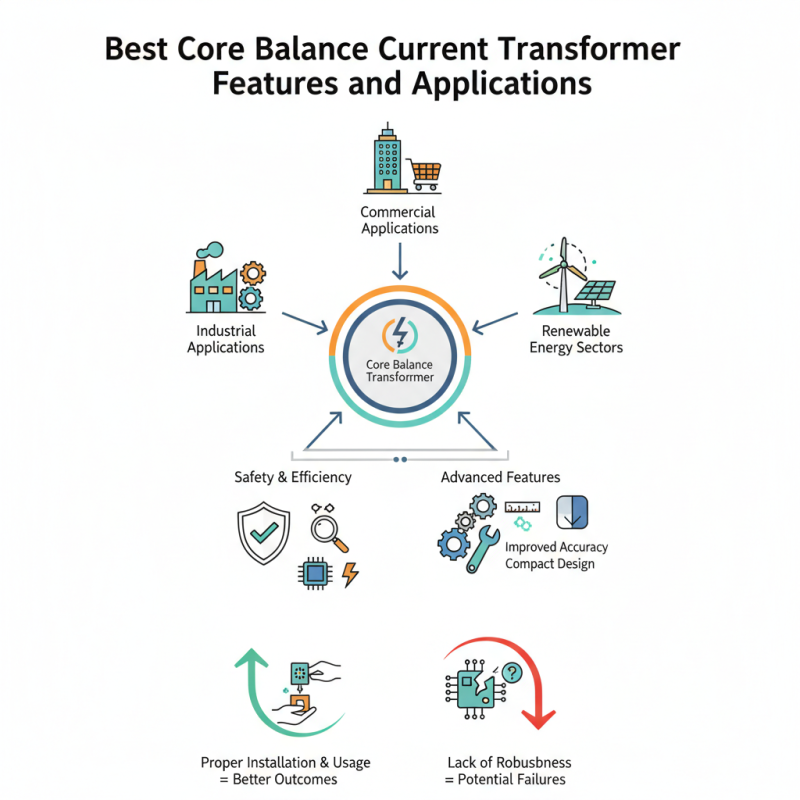
Big names like Schneider Electric and Siemens have rolled out some pretty advanced models of these transformers. They often come with cool features like being small and easy to fit, super sensitive sensors, and more accurate readings. But, gotta admit, not all of them are created equal. Some might not be as tough or reliable, and that can be a problem under tough conditions. So, it's really worth paying attention to what you're getting when you pick one.
At the end of the day, these transformers are super useful, but their performance totally depends on how well they're installed and used. It's a good idea to keep an eye on how they perform in real-world situations. Getting a handle on these little details can really help you get better results and keep everything safer overall.
Core Balance Current Transformer: An Overview
Core Balance Current Transformers (CBCTs) are crucial in power management and electrical safety. They primarily help in detecting leakage currents. This function is essential to prevent electrical faults and potential hazards. According to industry reports, around 30% of electrical faults stem from insulation failures. CBCTs can detect these issues early, reducing downtime and maintenance costs.
The features of CBCTs include high accuracy and sensitivity. They can measure imbalances in current effectively. Typically, they operate on the principle of magnetic balance. A well-functioning CBCT can detect even a small leakage current, sometimes as low as 30 mA. This precision is vital in industrial settings where safety is paramount. However, improper installation of these devices can lead to false readings. Some technicians may experience difficulty in interpreting the data, which can result in confusion.
Applications of Core Balance Current Transformers are vast. They are widely used in substations, data centers, and manufacturing facilities. The demand for CBCTs is rising with the increase in renewable energy sources. Their role in grid stability becomes more pronounced as more solar and wind energy is integrated. Yet, not all CBCTs on the market provide reliable performance. It is critical for professionals to consider the specifications carefully and avoid oversights in application choices.
Core Balance Current Transformer Features and Applications
Key Features of Core Balance Current Transformers
Core Balance Current Transformers (CBCT) are crucial for electrical safety. They detect leakage currents in electrical systems, prompting swift actions to prevent hazards. With an enclosed design, these sensors maximize sensitivity and accuracy. Their compact nature allows for easy installation in various environments.
Key features of Core Balance Current Transformer include high efficiency. They offer quick response times, essential for protecting sensitive equipment. Their design often incorporates robust materials, enhancing durability. These transformers can work in a wide range of temperatures, making them versatile. Their ability to measure unbalanced currents is particularly valuable in complex systems.
In practical applications, users sometimes overlook the installation specifics. An incorrect setup can lead to misreadings, affecting the entire system's reliability. It's critical to assess the environment where the Current Transformer Core is placed. Improper handling or positioning can introduce errors. Understanding and addressing these nuances can significantly improve performance, ensuring safety and efficiency in electrical systems.
Applications of Core Balance Current Transformers in Industries
Core balance current transformers (CBCT) play a vital role in various industries. They detect ground faults in electrical systems. This feature is essential for protecting equipment and ensuring safety. In places like manufacturing plants and commercial buildings, CBCTs monitor currents. They help prevent costly downtime.
In the renewable energy sector, CBCTs are increasingly important. Wind and solar farms rely on these devices for monitoring. They ensure systems operate efficiently and safely. However, the installation process can be challenging. Improper setup may lead to inaccurate readings. It’s crucial to pay attention to details during installation.
Another significant application is in transportation. Railways and subways utilize CBCTs for safety monitoring. These transformers identify imbalance in current flow, which helps prevent accidents. Nonetheless, industries sometimes overlook regular maintenance. This neglect can compromise the system's effectiveness. Regular checks are necessary for optimal performance.
How Core Balance Transformers Enhance Electrical Safety
Core balance transformers play a critical role in enhancing electrical safety. They detect imbalances in current flow, which can indicate potential faults. According to a report by the Institute of Electrical and Electronics Engineers, nearly 30% of electrical fires are linked to ground faults. This highlights the importance of effective monitoring systems in preventing accidents.
The concept of a Split Core Current Transformer allows for easy installation around existing conductors. This feature is essential for retrofitting older buildings that may lack adequate safety measures. The simple design enables swift detection of leaks or faults, safeguarding both equipment and personnel. In fact, a study found that implementing these transformers can reduce electrical accidents by over 50% in industrial settings.
However, reliance solely on these devices may create a false sense of security. Regular maintenance is crucial. Environments with excessive dust or moisture can compromise their functionality. Moreover, educating personnel on recognizing early signs of electrical faults remains vital. Despite their advantages, continuous vigilance is essential to ensure safety and effectiveness.
Installation and Maintenance Best Practices for Core Balance CTs
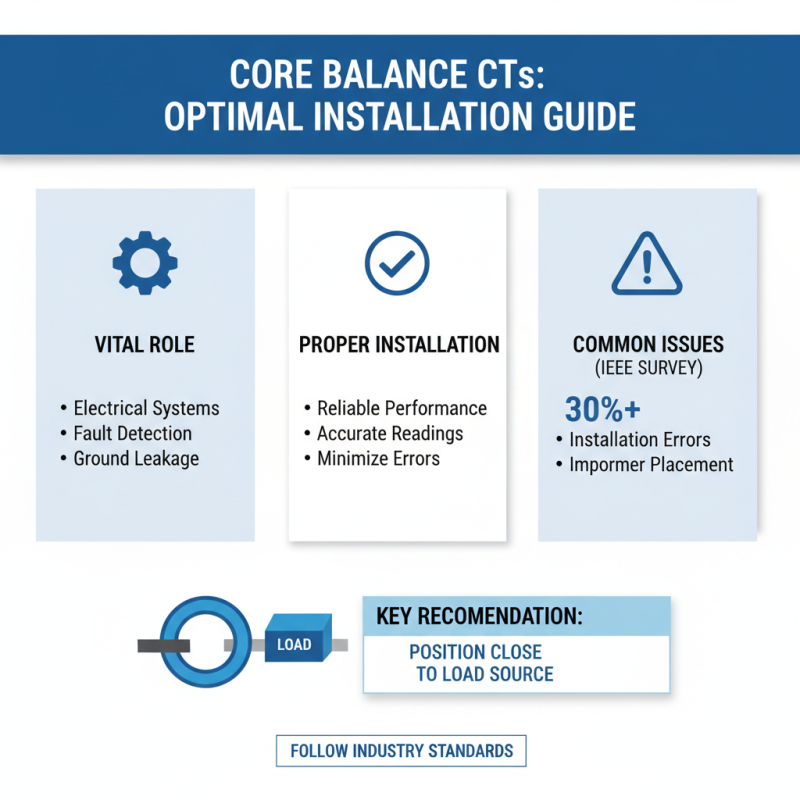
Core balance current transformers (CTs) play a vital role in electrical systems. Proper installation ensures reliable performance. Incorrectly installed CTs can lead to inaccurate readings. For optimal installation, it is crucial to follow industry standards. A survey by the IEEE indicates that over 30% of installation issues stem from improper placement. Positioning CTs close to actual load sources can minimize errors.
Maintenance practices are equally important. Regular inspection is necessary to catch potential faults. Experts recommend checking for physical damage and ensuring clean connections. According to the IEC, neglected maintenance can reduce the lifespan of CTs significantly. Many operators overlook the effects of environmental factors like humidity and dust. These can interfere with the transformer’s efficiency, leading to failures.
Training personnel is crucial for effective maintenance. Many technicians lack sufficient knowledge about CTs. Some maintenance teams struggle with identifying signs of wear. This has been noted in various industry reports, emphasizing the need for ongoing education. Properly training staff can lead to improved operational reliability. Understanding the intricacies of core balance CTs is essential for long-term performance.
Comparative Analysis of Core Balance CTs and Standard CTs
In the world of electrical engineering, the choice between core balance current transformers (CTs) and standard CTs impacts system safety and performance. Core balance CTs can detect earth faults much more effectively than their standard counterparts. Research shows they can achieve sensitivity levels below 1 mA, which is critical for modern protective schemes. In contrast, standard CTs generally focus solely on phase current measurement. This limitation can lead to oversight in fault detection.
Core balance CTs provide a unique advantage in applications where safety is paramount. They measure the imbalance in current flowing through three-phase systems, providing a quick response to potential hazards. Yet, relying solely on these devices may not be sufficient. It's often noted that integrating both core balance CTs and standard CTs yields comprehensive system protection. The combination enhances detection capabilities while ensuring accurate metering.
There are concrete challenges in choosing between these devices. For instance, some installations may require additional space for core balance CTs, complicating layout decisions. Plus, the calibration process can be time-consuming. Despite these hurdles, understanding the distinct features of Current Transformer And Potential Transformer remains essential for optimizing electrical systems. Industry reports indicate that failure to address these specifics can lead to increased downtime and maintenance costs, reminding engineers to weigh their options carefully.
Best Core Balance Current Transformer Features and Applications
| Feature | Core Balance CT | Standard CT |
| Size and Form Factor | Compact design for easier installation | Larger dimensions, may require more space |
| Sensitivity | High sensitivity to imbalance currents | Standard sensitivity, less optimal for imbalance detection |
| Application | Used for earth fault protection and power quality analysis | Primarily used for measuring current in circuits |
| Cost | Typically higher due to advanced features | More cost-effective for basic current measurements |
| Applications in Smart Grids | Well-suited for IoT applications in energy management | Limited applications in smart grid technology |
Future Trends in Core Balance Current Transformer Technology
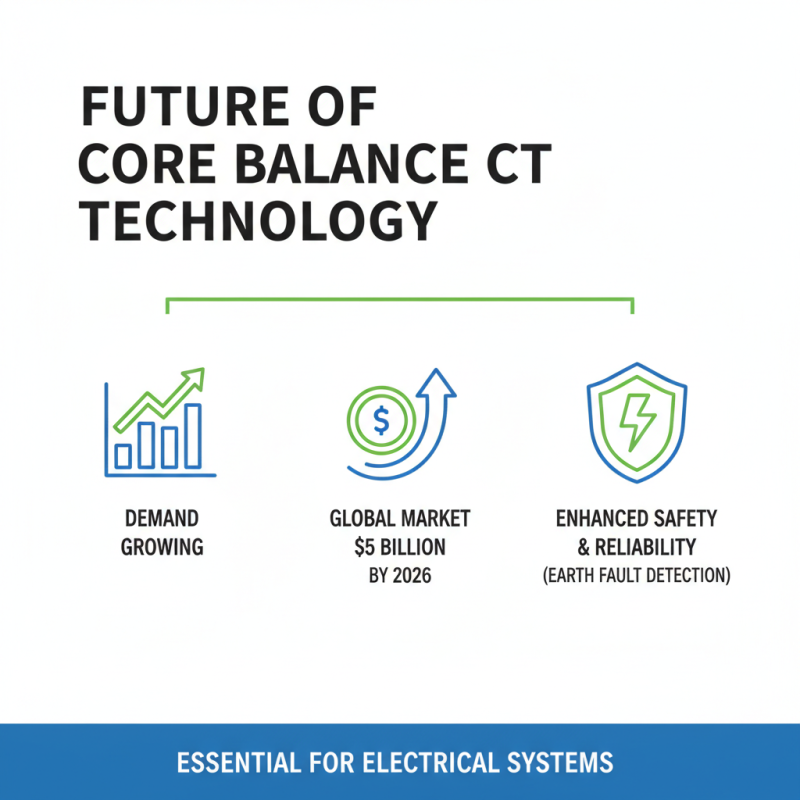
The future of core balance current transformer technology looks promising. Industry reports indicate that the demand for such transformers is growing. The global market is projected to reach $5 billion by 2026. This growth stems from their essential function in electrical systems. With robust capabilities in detecting earth faults, they enhance safety and reliability.
Innovations in sensor technology are driving significant improvements. Advanced materials are making these transformers more efficient and accurate. Distinctly, digital signal processing methods are gaining traction. These techniques allow for better data interpretation and quicker fault diagnosis. Reports suggest that the integration of IoT with core balance current transformers can lead to real-time monitoring. This indicates an exciting trend towards more interconnected systems.
Tips: Always consider installation challenges. Understanding environmental factors is key for effectiveness. Regular maintenance is crucial for longevity. While advancements are evident, there remain gaps in universal standards. Manufacturers should address these inconsistencies. Coordination across industries could promote better practices. Balancing technological advancement with practical application will be essential. Enhancements in core balance current transformers hinge on Current Transformer Potential Transformer capabilities.
Innovative Power Solutions: The Role of "Smurf" T Series Printed Circuit Board Welded Power Transformer in Modern Electronics
In the realm of modern electronics, innovative power solutions are paramount. One notable advancement is the introduction of the "Smurf" T Series printed circuit board welded Power Transformer. This transformer exemplifies the shift toward compact, high-efficiency power components that are essential for a wide range of consumer-grade applications. Its fully enclosed design and epoxy pot-sealed construction not only contribute to its durability but also ensure safety and compliance with rigorous national standards.
The "Smurf" T Series transformer stands out due to its remarkable power density, allowing for a significant performance output despite its relatively small size. Additionally, its ability to withstand an electrical strength of 50Hz 2kV RMS for one minute between the windings demonstrates its robust nature. Encased in a vibrant sky blue flame-retardant PBT engineering plastic, this transformer combines functionality with aesthetic appeal, making it a suitable choice for projects requiring both reliability and design considerations. The economical pricing further solidifies its status as a practical solution in the competitive landscape of electronic components, positioning it as an ideal choice for manufacturers looking to optimize their product offerings.
FAQS
: It helps improve daily productivity. Users report feeling more focused and organized. Enhanced time management is a key advantage.
Many users notice changes within weeks. However, individual experiences may vary. Patience is often required for lasting effects.
Clearing your workspace is recommended. A calm environment can enhance effectiveness. Avoid distractions for better results.
Most people can benefit from it. However, those with specific conditions should consult a professional first. Awareness is important.
Some users report mild discomfort. If it persists, consider taking a break. Reflecting on your usage can help.
Regular and consistent use is key. Setting realistic goals can keep you motivated. Review your progress to make adjustments.
Conclusion
The article "Best Core Balance Current Transformer Features and Applications" provides a comprehensive overview of Core Balance Current Transformers (CBCTs), highlighting their key features and various applications across industries. CBCTs are designed to detect imbalance in electrical systems, enhancing safety by preventing electrical faults. The article also discusses how these transformers improve electrical safety through continuous monitoring and fault detection, which is vital in high-risk environments.
Additionally, it outlines best practices for the installation and maintenance of Core Balance Current Transformers to ensure optimal performance. A comparative analysis highlights the advantages of CBCTs over standard current transformers, showcasing their growing importance in modern electrical infrastructure. Finally, the article looks ahead to future trends in CBCT technology, indicating that continuous advancements will further bolster their effectiveness and application in safeguarding electrical systems.