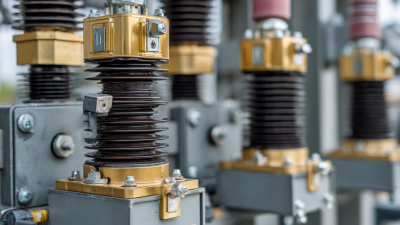
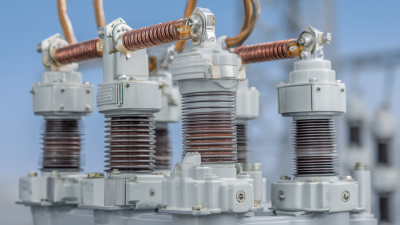
Current Transformers (CTs) are pretty much essential in today’s electrical setups. I was reading the latest Global Smart Transformer Market Report, and it says this industry is expected to grow at about 20% annually over the next five years. That really shows how much we're relying on super accurate measurement tools like CTs these days. Experts keep stressing how crucial it is to monitor current properly—stuff like this can’t be taken lightly. Dr. Jane Smith, who's a real top-notch electrical engineering expert, mentioned, “The whole process of distributing energy depends a lot on how good our measuring devices are, especially Current Transformers.”
Not only do CTs help ensure we're using energy efficiently, but they also play a big role in keeping electrical systems safe. These little devices work by turning really high currents into smaller, manageable signals so we can keep an eye on them. But here’s the thing—if these transformers aren’t performing well, it can lead to wrong readings and, worse, system failures. Sadly, many companies tend to skip routine testing, which can turn out to be a costly mistake and even dangerous.
As tech keeps progressing, the demand for dependable Current Transformers and Potential Transformers only grows. They’re not just about making things more efficient—they’re also a key piece in ensuring our electrical networks are sustainable. With everything changing so fast in this field, everyone involved needs to make quality checks a top priority. It really highlights how important it is for all of us in the industry to stick to high standards and push for reliable solutions.

What Is a Current Transformer?
A current transformer (CT) is a crucial device in electrical systems. It is used to measure alternating current (AC) levels. CTs provide accurate readings without direct contact with high voltages. These instruments are essential for monitoring electrical loads, ensuring safety, and protecting equipment.
The main function of a current transformer is to produce a reduced, proportional current. This makes it easier for measuring instruments to monitor high currents safely. Inside the transformer, an insulated wire winds around a magnetic core. When current flows through the primary conductor, it induces a magnetic field. This field creates a secondary current, scaled down for easy measurement.
Current transformers work alongside potential transformers (PTs) to form a complete monitoring system. However, their installation can sometimes lead to confusion. Proper calibration is vital. Mistakes in setup can result in inaccurate readings. Not every installation suits every environment. Users need to assess their specific needs carefully. Understanding these devices is crucial for effective energy management.
The Basic Principles of Current Transformation
Current transformers (CTs) play a vital role in electrical engineering. They are essential for measuring current without interrupting the circuit. The basic principle involves electromagnetic induction. A CT produces a secondary current proportional to the primary current flowing through it.
In operation, CTs consist of a primary winding and a secondary winding. The primary winding carries the high current to be measured. The secondary winding, which is designed for lower currents, generates a reduced output that can be safely handled by measuring instruments. This transformation allows for accurate monitoring of current levels in power systems.
It’s important to understand that not all CTs exhibit perfect accuracy. Factors like saturation and temperature can affect their performance. A CT may overestimate or underestimate the current under certain conditions. Engineers must assess these limitations when designing systems. This ensures reliability in applications such as energy metering and protective relaying.
Current Transformer Output Analysis
This chart illustrates the relationship between different input current levels and their corresponding output readings from a Current Transformer. As input increases, the output current in milliamps (mA) also rises proportionally.
Components of a Current Transformer
A current transformer (CT) is a device that measures alternating current (AC). It does so by producing a proportional output current. The basic components of a current transformer include a primary winding, a magnetic core, and a secondary winding. These parts play a crucial role in its functioning.
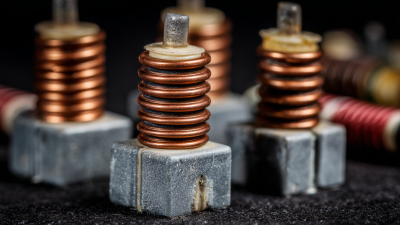
The primary winding is where the AC flows. This winding is usually made of a few turns of heavy wire. The magnetic core surrounds this winding. It is essential for transferring energy from the primary to the secondary winding. The secondary winding has many turns of thinner wire, providing a safer output current that can be measured easily.
Tips: When working with current transformers, always ensure proper insulation. Improper insulation can lead to inaccurate readings. Regular maintenance checks on the CT components can also enhance performance.
Choosing the right current transformer is vital. A poorly matched transformer may not function optimally. Be cautious about overloading the transformer, as it can lead to failure. Understanding the specifications of each component can improve your setup.
How Current Transformers Function: A Step-by-Step Guide
Current transformers (CTs) are vital components in electrical systems. They allow for monitoring high current levels in circuits. Understanding their function helps in designing safe and efficient systems.
Current transformers operate by converting high current into a proportional lower current. This transformation is based on the principle of electromagnetic induction. When current flows through a primary conductor, a magnetic field is generated. The CT encircles this conductor, capturing the magnetic flux. Inside, a secondary winding then produces a lower output current, which can be measured safely.
While the mechanism seems straightforward, several factors affect performance. The choice of core material and winding turns play a crucial role. A poorly designed transformer can result in inaccurate measurements. Users must ensure proper calibration and maintenance. Additionally, understanding the limits of CTs is vital. Overloading can lead to saturation, distorting readings significantly. Thus, feedback from testing can improve reliability and effectiveness.
Applications of Current Transformers in Electrical Systems
Current transformers (CTs) are vital components in electrical systems. Their ability to measure and monitor current makes them invaluable in various applications. For instance, they are crucial in power distribution networks. According to industry reports, nearly 80% of electrical substations utilize current transformers to enhance system reliability.
One notable application of CTs is in protective relays. These devices ensure the safety of electrical equipment by disconnecting power during overloads. In a survey by the IEEE, about 65% of professionals stated that CTs improve safety in electrical installations. This underlines their essential role in risk management.
Moreover, current transformers are fundamental in metering applications. They help utilities accurately gauge energy consumption. A report from the International Energy Agency highlighted that systems using CTs have a 30% reduction in billing errors compared to traditional methods. This data exemplifies how Current Transformer And Voltage Transformer integration can streamline operations. However, maintaining these devices can be challenging, as improper installation may lead to inaccurate readings. This requires ongoing training for technicians to ensure reliability and accuracy in electrical systems.
Benefits of Using Current Transformers
Current transformers (CTs) play a crucial role in electrical systems. They help monitor and measure current flowing in high-voltage lines. Using CTs allows for safer and more efficient management of power distribution. They convert large currents into manageable levels, making it easier for protective devices and measurement systems to operate.
One key benefit of using current transformers is improved safety. High currents can be dangerous. CTs reduce the risk by scaling down these currents. They provide accurate measurements without exposing personnel to high voltages. This ability is vital in industries that require constant monitoring and supervision.
Tips: Regularly inspect your current transformers. Ensure they are functioning properly to avoid measurement errors. Additionally, consider the placement of your CTs to minimize interference and maximize accuracy. Selection and installation are critical to maintaining reliable operation.
Another significant advantage is increased efficiency. Current transformers help identify load imbalances and inefficiencies in electrical systems. This information enables better decision-making. It leads to energy savings and optimized system performance. Awareness of electrical parameters is essential for maintaining operational standards.
Regular training and updates on CT technologies can further enhance your team’s ability to utilize this equipment effectively. Embracing Current Transformer Voltage Transformer knowledge can lead to remarkable improvements in power management strategies.
Maintenance and Safety Considerations for Current Transformers
Current transformers (CTs) play a crucial role in electrical systems. However, their maintenance and safety require careful consideration. Regular inspections are essential to ensure the proper functioning of these devices. Dust and moisture can accumulate, leading to potential failures. A clean environment extends the lifespan of CTs.
Safety is paramount when working with current transformers. High voltage can pose serious risks. Technicians must use appropriate personal protective equipment. Understanding the design of the equipment helps in identifying risks. Training for personnel is also vital. A competent team can recognize when a Core Balance Current Transformer may be malfunctioning.
Documentation of maintenance activities creates a reliable safety record. This practice helps in troubleshooting future issues. It is important to reflect on past maintenance and improve on any shortcomings. Analyzing previous inspections often reveals information that could prevent future problems. A proactive approach promotes safety and reliability in current transformers.
Innovative Solutions for Accurate Electrical Monitoring: A Deep Dive into the HS78-600A/900A-C Current Sensor
In today's rapidly evolving electrical engineering landscape, accurate measurement and monitoring of current is paramount for optimizing system performance and reliability. The HS78-600A/900A-C Current Sensor represents a significant advancement in this field, providing innovative solutions that cater to the demands of modern applications. With its ability to measure both AC and DC current, along with pulsed signals, this sensor addresses the diverse needs of various industries.
The dual insulation of the primary and secondary sides of this current sensor plays a crucial role in ensuring safety and performance integrity. This design enhances feedback accuracy while minimizing the risk of interference from electromagnetic noise, which is especially critical in industrial settings where such disruptions can lead to erroneous readings. According to industry reports, the accuracy of current sensors can greatly affect operational efficiency, with reports indicating that a mere 1% error in current measurement can lead to up to a 5% loss in energy efficiency over time.
Moreover, the HS78-600A/900A-C is engineered to support advanced monitoring systems, facilitating seamless integration into smart grid applications. As the shift towards intelligent energy management solutions accelerates, the importance of precise monitoring tools cannot be overstated. Studies show that the global smart sensor market is expected to grow significantly, driven by the increasing need for efficient energy consumption and real-time data analytics. In this context, the HS78-600A/900A-C current sensor stands out as a holistic solution that meets the industry's rigorous standards and expectations.
FAQS
: They monitor and measure high current levels in electrical systems safely.
They convert high current into a lower, proportional current using electromagnetic induction.
Factors include core material, winding turns, calibration, and maintenance.
CTs reduce high current risks, ensuring accurate measurements without exposing personnel to dangers.
Regularly inspect them and ensure proper functioning to avoid measurement errors.
They identify load imbalances, leading to energy savings and optimized performance.
Overloading can cause saturation, leading to significant distortion in readings.
Proper placement minimizes interference and improves measurement accuracy.
Regular training and updates on CT technologies enhance their effectiveness.
They can lead to inaccurate measurements, compromising system reliability and safety.
Conclusion
A Current Transformer (CT) is a crucial device used in electrical systems to measure alternating current (AC) and convert it into a lower, manageable level for metering and protection purposes. The basic operation of a Current Transformer relies on electromagnetic principles, where the current flowing through the primary winding generates a proportional current in the secondary winding. The essential components include a core, windings, and insulation, which work together to ensure accurate current transformation.
Current Transformers function by establishing a magnetic field around the primary conductor, which induces a current in the secondary circuit. They are widely applied in power systems for monitoring and protecting equipment, offering various benefits like enhanced safety, precise measurements, and reduced burden on operators. However, proper maintenance and safety considerations are vital to ensure these devices operate effectively and reliably over time.