In the world of electrical engineering, a High Frequency Transformerreally plays a vital role. Basically, it's designed to move energy around more efficiently across different kinds of applications. These Transformers run at higher frequencies than your regular transformers, which actually helps boost their performance.
To get what a High Frequency Transformer is all about, it's good to understand a bit about how it works inside. Usually, it has a smaller core and lighter windings, which helps cut down on energy losses. This clever design not only makes it more efficient but also allows it to be more compact—a real plus when space is tight.
That said, finding the perfect balance in a High Frequency Transformer? That’s no walk in the park. Engineers need to pick the right materials and come up with smart design choices. Sometimes, they might overlook a detail, which can lead to inefficiencies. A good transformer, in the end, should not only tick all the technical boxes but also do a solid job in real-world use without any hassle.
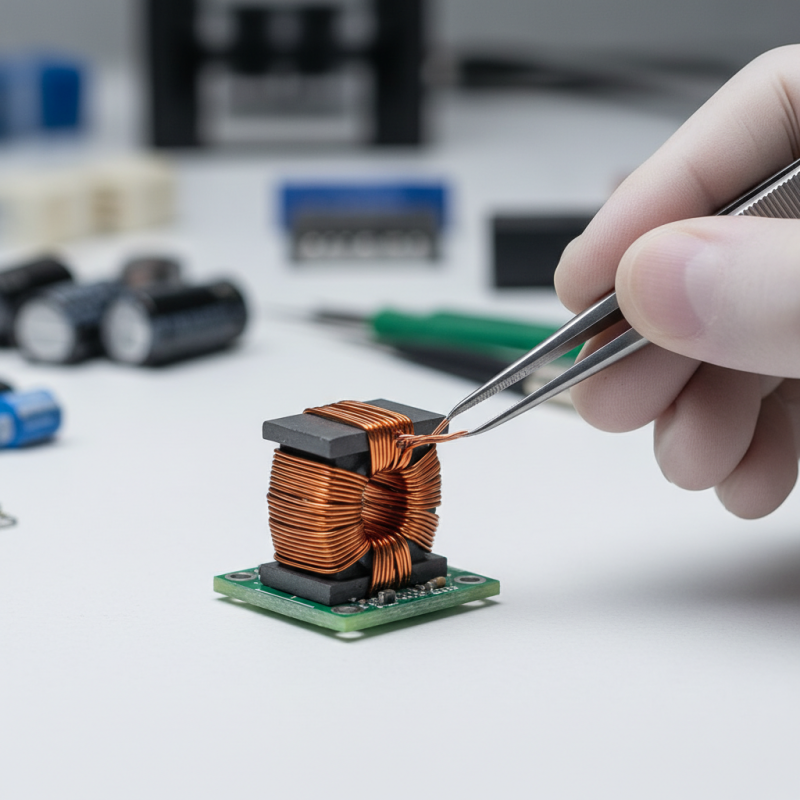
What is a High Frequency Transformer?
High frequency transformers play a crucial role in modern electronic devices. They are designed to efficiently convert electrical energy at high frequencies. This makes them essential for applications like radio transmitters and power supplies. The High-Frequency Current Transformer works differently than traditional transformers. It operates with smaller cores and lighter materials, allowing for better performance at elevated frequencies.
These transformers use magnetic fields to transfer energy. As the frequency increases, the inductance and capacitance in the transformer must be carefully balanced. If not, losses can occur. High-frequency Current Transformers also require precise winding techniques. Errors in construction can lead to inefficiency. Designers often face challenges in keeping the size compact while ensuring effective operation.
The benefits of using high frequency transformers are numerous. They offer improved efficiency and reduced weight compared to standard models. However, they also come with drawbacks. The complexity of their design can make repairs difficult. Additionally, they may not be suitable for all applications. Understanding the unique qualities of high-frequency current transformers is key for engineers working on innovative projects.
Key Components of High Frequency Transformers
High Frequency Transformers are essential in various electronic applications. Their design includes several key components that determine their functionality and efficiency.
The core material is critical. Ferrite is commonly used due to its high magnetic permeability. This allows for efficient energy transfer at high frequencies. However, ferrite can experience losses at certain frequencies, leading to reduced performance. Selecting the right core material for specific applications is essential.
Windings are another vital component. They create the primary and secondary coils. The number of turns affects voltage transformation. For example, a higher number of turns in the secondary coil increases the output voltage. Careful design must be considered to avoid issues like parasitic capacitance, which can limit efficiency.
Proper insulation materials also impact reliability. They should withstand high temperatures. Yet, they can contribute to weight and overall size. Balancing these aspects is often a challenge in design. Data from industry reports show that improvements in insulation technology can lead to significant performance gains in High Frequency Current Transformers. Aim for optimization, but remain cautious of potential drawbacks.
What is a High Frequency Transformer and How Does it Work? - Key Components of High Frequency Transformers
| Component | Description | Function |
| Core Material | Made from ferrite or laminated silicon steel for high efficiency. | Provides low magnetic loss and high magnetic permeability. |
| Windings | Coils made from copper or aluminum wire, often with a fine gauge. | Creates magnetic fields when current flows through them, enabling energy transfer. |
| Insulation | Materials like polyester or epoxy used to prevent short circuits. | Ensures safe operation and prevents energy losses due to arcing. |
| Terminals | Metal connectors for input and output connections, typically soldered. | Facilitates connection to external circuits. |
| Shielding | Metal enclosures or layers to minimize electromagnetic interference. | Reduces noise and improves the performance of surrounding electronic components. |
Principle of Operation for High Frequency Transformers
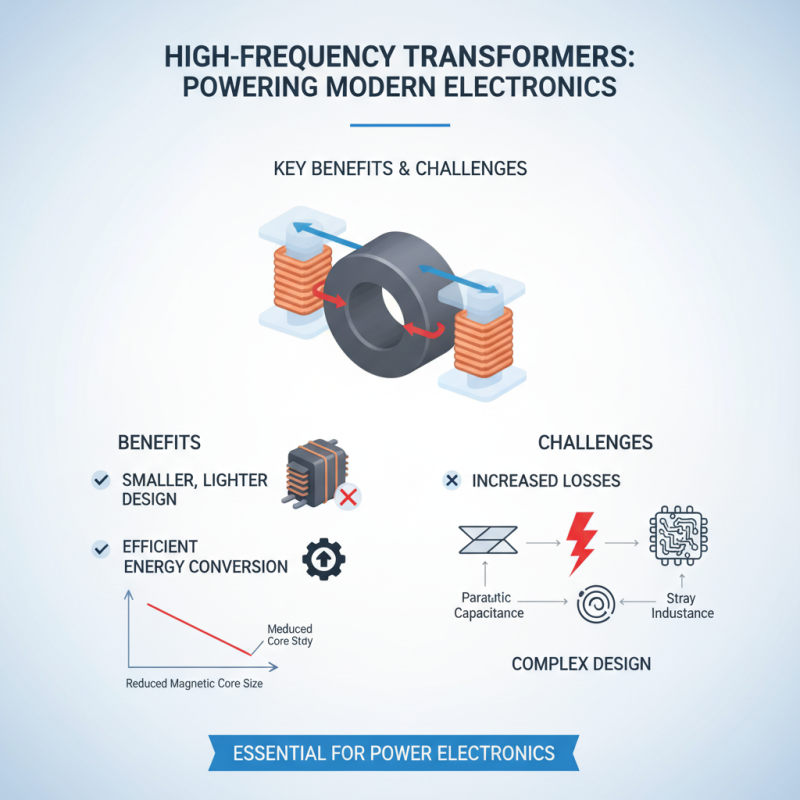
High frequency transformers are essential components in today’s power electronics. They function by converting electrical energy at high frequencies, typically in the range of 20 kHz to several MHz. This capability allows for smaller, lighter transformer designs compared to low-frequency alternatives. Higher operating frequencies result in a reduced size for the magnetic core. However, this design can introduce challenges, such as increased losses due to parasitic capacitance and stray inductance.
The principle of operation for high frequency transformers relies on electromagnetic induction. When a high-frequency alternating current flows through the primary coil, it generates a time-varying magnetic field. This magnetic field induces a current in the secondary winding through a process known as mutual induction. The efficiency of energy transfer is critical. Industry reports suggest that efficiency rates can exceed 95% in optimal designs. However, real-world factors such as core material and winding configuration often influence performance.
**Tip:** Pay attention to core materials. Ferrite cores are popular for high frequency applications due to their low losses. They can significantly enhance efficiency.
Not all high frequency transformers perform equally. Designs must consider winding geometry and wire insulation. A poorly designed transformer may suffer from overheating or reduced lifespan. Regular testing is essential for reliability.
**Tip:** Regularly check temperature and performance during operation. Early detections of issues can save time and costs in the long run.
Applications of High Frequency Transformers in Industry
High-frequency transformers are crucial in various industrial applications. These devices operate at high frequencies, typically above 20 kHz. They are smaller and lighter than traditional transformers, allowing for more efficient energy transfer and reduced losses during operation.
In the automotive industry, high-frequency transformers play a vital role in electric vehicle (EV) chargers. They facilitate the conversion of low voltages to higher, usable voltages efficiently. This supports fast charging, essential for modern EV users. Moreover, in telecommunications, these transformers are used in signal processing and distribution. Their ability to handle higher frequencies enhances data transmission capabilities.
However, challenges exist in using high-frequency transformers. They may generate heat more quickly than conventional transformers. Managing thermal conditions is crucial to maintain performance and reliability. Additionally, the materials used can affect efficiency, leading to increased costs. Addressing these issues requires ongoing research and innovation in transformer design and materials. The evolution of high-frequency transformers will continue to significantly influence various sectors.
Comparing High Frequency Transformers to Low Frequency Transformers
High frequency transformers operate at frequencies above 1 kHz, while Low Frequency Transformers typically function at 50 or 60 Hz. The main difference lies in their design and application. High frequency transformers are smaller, lighter, and more efficient. They can handle power more effectively in compact electronic devices. In contrast, low frequency transformers are bulkier and often used in traditional power distribution.
Efficiency is a critical factor. High frequency transformers can achieve efficiencies over 90%. This increased efficiency is crucial in consumer electronics. It leads to reduced heat loss and extended device life. However, the performance of high frequency transformers can degrade in certain conditions, such as high temperatures or in environments with magnetic interference.
On the other hand, low frequency transformers can handle larger power loads, making them suitable for industrial settings. Their robust design allows them to operate safely under high voltage conditions. Yet, they tend to be less energy-efficient. Reports indicate that as much as 10-20% of energy can be wasted in low frequency transformers. This inefficiency is a significant drawback in modern energy systems that prioritize sustainability.
Comparison of High Frequency and Low Frequency Transformer Efficiency
This chart demonstrates the efficiency of high frequency transformers compared to low frequency transformers. High frequency transformers typically achieve higher efficiency due to reduced losses at operating frequencies.
Advantages of Using High Frequency Transformers
High frequency transformers are increasingly popular in modern electrical systems. They offer several distinct advantages over traditional transformers. One of the main benefits is their compact size. High frequency transformers can be far smaller, fitting easily in tight spaces. This is especially useful in applications where weight and volume are critical, like portable devices.
Another advantage is efficiency. These transformers operate at higher frequencies, reducing energy loss. This makes them ideal for applications that demand low power dissipation. For example, in power supplies, this efficiency translates to longer device life and lower energy costs. Additionally, the reduced heat generation allows for less cooling infrastructure.
However, there are challenges. High frequency transformers can experience issues with insulation and high-frequency losses. Careful material selection is crucial. Designing for high frequency can also be complex, requiring precise engineering. It’s a balancing act. While they boost performance, they might not be the right choice for every application. Understanding their limitations is essential for optimal use.
Challenges and Considerations in High Frequency Transformer Design
High Frequency Transformers are pivotal in modern electronics. However, designing them comes with unique challenges. One significant concern is minimizing losses. High frequency operation can lead to increased energy loss, which affects efficiency. Engineers must balance component size and performance. Too small can lead to saturation, while too large may increase overall costs.
Material selection is crucial in high frequency transformer design. Core materials need to handle rapid magnetic flux changes. Conventional materials might not suffice here. Some might experience overheating. It’s vital to choose materials that can effectively dissipate heat. This can prolong the transformer’s lifespan while maintaining reliability.
Tips: Always account for thermal management. Implementing cooling mechanisms can significantly enhance performance. Additionally, consider the electromagnetic interference (EMI) in your designs. High Voltage Power Transformers are susceptible to noise. Shielding and grounding techniques can mitigate these issues. Reflecting on these aspects can lead to a better, more efficient design.
FAQS
: High frequency transformers convert electrical energy at high frequencies. They are crucial for modern electronic devices.
They use electromagnetic induction for energy transfer. An alternating current creates a time-varying magnetic field.
They generally operate at frequencies above 20 kHz, often reaching several MHz.
They offer improved efficiency and lighter designs. This reduces losses and enhances performance in various applications.
They can generate more heat. Also, complex designs may lead to repair difficulties and inefficiencies if not constructed well.
Ferrite cores are popular for their low losses. The choice of material can significantly influence efficiency.
Regular checks can detect issues like overheating. Early detection helps prevent costly repairs and downtime.
No, they may not work well in every situation. Understanding specific application needs is essential for effectiveness.
Conclusion
A High Frequency Transformer is an electrical device designed to transfer energy between circuits using high frequencies, typically above 20 kHz. Its key components include core materials, windings, and insulation, which work together to facilitate efficient energy conversion. The principle of operation relies on electromagnetic induction, where an alternating magnetic field in the primary winding induces a voltage in the secondary winding. High Frequency Transformers find extensive applications in various industries, including power supplies, telecommunications, and renewable energy systems.
When comparing High Frequency Transformers to their low-frequency counterparts, the former generally offers advantages such as reduced size and weight, improved efficiency, and enhanced thermal performance. However, designing these transformers comes with challenges, including issues related to core saturation, heat dissipation, and electromagnetic interference. Overall, High Frequency Transformers play a critical role in modern electrical systems, optimizing performance while addressing the specific needs of high-efficiency applications.