TransFar Electronics

Inquiry
Form loading...
- Phone
- E-mail
- WhatsApp
- WeiChat

TransFar Electronics
You know, with how fast electronics are advancing these days—especially in electric vehicles and renewable energy—the demand for really efficient Dc-Dc Converters is just exploding. I came across a report from MarketsandMarkets that predicts the global market for these converters will hit around USD 49.38 billion by 2025. That's a huge jump, mostly because more people are jumping on the electric vehicle bandwagon and using portable gadgets that need small yet powerful power solutions. On a related note, Beijing TransFar Electronics Group Co., Ltd. is actually leading the charge here. They’re big on creating innovative stufflike new energy current and Voltage Sensors, as well assuper-efficient charging stations. So, in this guide, I’ll walk you through some of the coolest, most up-to-date solutions for DC-DC converters. We’ll look at what's new tech-wise and why being smart about power management really matters in our increasingly electrified world.
You know, DC-DC converters are honestly kinda the unsung heroes of modern electronics. They’re like the backbone when it comes to managing power, and you’ll find them everywhere—from gadgets we use daily to big industrial systems. With everyone wanting more energy-efficient devices, the global market for these converters is expected to hit around $11.7 billion by 2026. That’s pretty impressive growth—about 6.3% annually since 2021! So, what’s fueling this boom? Things like electric vehicles, renewable energy projects, and smart grids are all pushing demand. Companies like Beijing TransFar Electronics Group Co., Ltd. are really leading the charge, focusing on top-notch parts that boost both how well and how reliably these converters work.
Getting how DC-DC converters function is pretty important if you're into improving power efficiency and overall system performance. Basically, they’re critical for voltage regulation, making sure everything from circuits to batteries runs smoothly. For example, recent studies have shown that with some smarter, more advanced designs, these converters can reach efficiency levels of up to 95%. That’s a big deal because it cuts down a lot on energy waste compared to older systems. As manufacturers push more of these into new energy projects, everyone’s looking for better, more innovative solutions to make sure these things perform at the highest level, especially given how demanding today’s electronics market can be.
In the rapidly evolving field of voltage conversion technology, understanding market trends and efficiency metrics is essential. One notable advancement is the dual-mode operation of modern Voltage Converters, which can function in both "active" and "passive" modes. This flexibility allows for efficient energy management in various applications, from consumer electronics to industrial machinery. According to a recent industry report, the global voltage converter market is projected to reach USD 12 billion by 2025, driven by the rising demand for energy-efficient solutions.
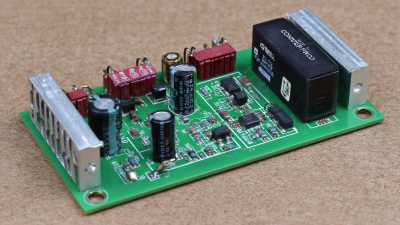
The integration of the I/V converter and transformer into a single unit is a game changer in voltage conversion. This design not only simplifies the system architecture but also ensures fixed values for both input and output voltages, a crucial factor for achieving consistent performance. Additionally, the adaptability of the input coil—with options for PCB soldering or flexible wire connections—cater to diverse application needs and enhances user convenience. As market analysis indicates, such innovations could lead to a 15% increase in efficiency over traditional voltage conversion methods.
Moreover, industry experts highlight that the output signal's versatility, being capable of both AC and DC, aligns with the growing trend of hybrid power systems. These systems are increasingly employed in renewable energy setups where fluctuating energy sources necessitate adaptive voltage management. With insights from organizations like the International Energy Agency, it's clear that advancing voltage conversion technology not only meets current demands but is poised to spearhead future developments in efficient energy utilization.
: The primary focus is enhancing the efficiency of DC-DC converters, aiming to maximize conversion efficiency and minimize energy losses.
Advanced semiconductor materials and topologies can significantly improve performance under varying load conditions, contributing to higher efficiency.
Digital control technology enhances performance and efficiency by allowing for sophisticated algorithms that dynamically adjust the converter's behavior in real-time.
Advanced features include predictive algorithms, fault detection, and adaptive control strategies that improve overall performance and extend lifespan.
The market is projected to grow from $6.93 billion in 2025 to $22.89 billion by 2032, with a CAGR of 18.6%.
Future trends include higher efficiency rates, reduced size, improved thermal management, and potential integration of AI for smarter energy solutions.
Innovations such as integrated circuits are expected to play critical roles in enhancing performance and reliability in DC-DC converters.
Adaptability is important because modern electronics require varying power levels based on real-time conditions, making it essential for converters to respond effectively.
It allows designers to monitor performance metrics and make adjustments remotely, fostering a smarter and more interconnected power management system.
The goal is to achieve more efficient power conversion solutions while meeting the energy demands of next-generation devices across various applications.