TransFar Electronics

You know, in today’s fast-paced tech world, Current Sensors are genuinely making a big difference. They’re key when it comes to boosting energy efficiency and sparking new innovations across all kinds of industries. I recently came across a report from MarketsandMarkets that says the market for these sensors is expected to hit around $8.2 billion by 2025—pretty impressive, right? And it’s growing at nearly 10% annually! The main drivers? The rise of smart grid tech, electric vehicles, and renewable energy projects—all of which need precise current measurement to run smoothly and reliably.
These sensors aren’t just about tracking energy—they’re helping create smarter systems in industries like automotive, manufacturing, and even consumer gadgets. A study by Mordor Intelligence points out that the automotive sector is set to see the fastest growth in current sensor use, especially as more electric vehicles hit the roads everywhere. Big names like Texas Instruments, Infineon, and Allegro Microsystems are leading the charge, constantly pushing the boundaries to develop sensors that can handle the increasing complexity of modern electrical setups.
As we look at the top five current sensors shaping tech and innovation in 2025, it’s pretty clear how much these advancements don’t just benefit individual sectors—they’re also paving the way for a more connected, sustainable future for all of us.
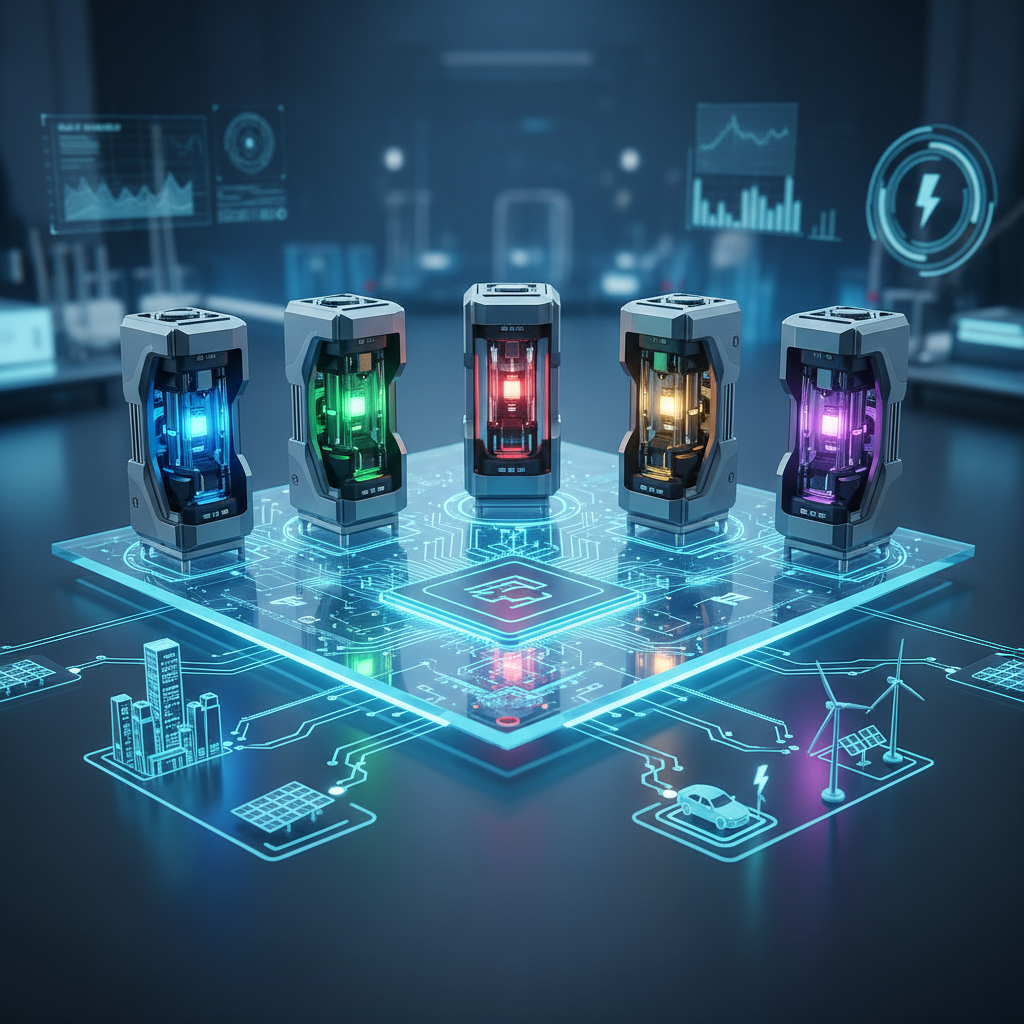
The landscape of current sensor technologies is transforming data acquisition across various sectors, particularly in agriculture and healthcare. In precision farming, IoT agriculture sensors play a crucial role in enhancing crop yields and sustainability by providing real-time data on soil health, moisture levels, and crop conditions. These advanced sensors, when integrated with AI and big data analytics, enable farmers to make informed decisions, leading to optimized resource usage and improved productivity. This synergistic relationship between sensor technology and data science is ushering in a new era of agricultural innovation.
Moreover, in the healthcare domain, innovative sensor technologies such as flexible monitoring devices are revolutionizing patient care. For example, AI-powered wristbands allow for accurate tracking of respiratory health through non-invasive means, utilizing wrist pulse signals. Such advancements not only enhance patient monitoring but also facilitate more personalized healthcare solutions, ultimately transforming how medical professionals approach diagnostics and treatment. As these technologies continue to evolve, they hold significant potential to redefine data acquisition across multiple industries.
This chart illustrates the projected performance improvements of the top 5 current sensor technologies based on their sensitivity (mV/A), range (A), and response time (ms) for the year 2025.
The advancements in Hall EffeCt Sensors are set to significantly enhance performance across various applications, leveraging their ability to measure current with high precision. As the global current sensor market is projected to grow from $3.40 billion in 2025 to $6.67 billion by 2032 at a CAGR of 10.10%, Hall Effect sensors are playing a crucial role in this expansion. Their innovative designs improve linearity and sensitivity, making them ideal for a broad range of industrial applications, including electric vehicles and renewable energy systems.
Moreover, the integration of Hall Effect sensors with advanced technologies, such as multimodal sensor fusion and edge computing, is enabling the development of adaptive control systems. This allows for enhanced performance in collaborative robotic sorting arms while optimizing energy consumption and operational efficiency. As industries increasingly adopt these smarter systems, the role of Hall Effect sensors as a cornerstone of technological innovation will continue to grow, providing the reliable current sensing capabilities essential for modern applications.
The advancement of optical current sensors represents a significant trend in precision applications, highlighting a shift towards more accurate and reliable measurements in various sectors. According to a recent report by MarketsandMarkets, the optical current sensing market is projected to grow from $315 million in 2020 to $482 million by 2025, reflecting a compound annual growth rate (CAGR) of 9.1%. This growth can be attributed to their ability to measure high currents with minimal loss, making them ideal for applications in smart grids, renewable energy systems, and electric vehicles.
Emerging trends are focusing on enhancing the sensitivity and resolution of these sensors, driving innovation in materials and designs. New developments in fiber optic technology allow for smaller, lightweight sensors that maintain high performance. Additionally, the integration of artificial intelligence and machine learning algorithms is expected to further improve data processing and analytics, providing unprecedented insights into current measurements. These innovations not only optimize energy distribution and consumption but also significantly enhance the safety and reliability of electrical systems in diverse industries.
The integration of IoT capabilitiesin modern current sensors is revolutionizing how industries monitor and manage electrical currents. By embedding smart technologies into current sensors, manufacturers are enabling real-time data collection and analysis, which leads to improved efficiency and predictive maintenance. These sensors can communicate wirelessly with other devices, creating a networked environment where data flows seamlessly across platforms. This interconnectivity is crucial for industries that depend on uninterrupted Power Supply and operational reliability.
Furthermore, IoT-enabled current sensors help in enhancing energy management systems by providing granular insights into energy consumption patterns. Companies can track performance metrics and detect anomalies instantly, leading to prompt corrective actions. This proactive approach not only reduces costs associated with downtime but also contributes to more sustainable practices by optimizing energy use and minimizing waste. As these technologies evolve, they pave the way for smarter grids and more resilient infrastructures, significantly contributing to technological advancement across various sectors.
The rapid evolution of current sensors is substantially influenced by advancements in machine learning, enabling a transformation in how we monitor and manage electrical systems. Machine learning algorithms can analyze vast amounts of data from current sensors, leading to enhanced accuracy in detecting anomalies and predicting failures. This capability not only optimizes energy consumption but also prolongs the lifespan of electrical components, thereby reducing operational costs.
Tips: When implementing machine learning in current sensor technology, ensure the training data is diverse and representative of actual operating conditions. This helps improve the predictive performance of the model and minimizes the chances of false positives. Regularly updating the algorithms based on new data can also enhance their accuracy over time.
Moreover, current sensors equipped with machine learning can facilitate more sophisticated control systems in smart grids and industrial automation. These sensors can adaptively learn from real-time data and make intelligent decisions about energy distribution and load balancing. As the demand for efficiency and sustainability increases, the integration of machine learning in current sensor innovation is set to play a pivotal role in shaping the future of technology and innovation.
Tips: Collaborate with data scientists to fine-tune machine learning models, ensuring they align with specific application needs. Consider starting with pilot projects to evaluate performance before a full-scale deployment.
| Sensor Type | Key Features | Innovative Applications | Impact of Machine Learning |
|---|---|---|---|
| Hall Effect Sensors | Highly sensitive, wide measurement range | Electric vehicles, robotics | Enhanced data interpretation and predictive maintenance |
| Rogowski Coils | Flexible, easy to install, wide bandwidth | Power distribution monitoring | Real-time anomaly detection and fault prediction |
| Optical Sensors | Immune to EMI, high-speed response | Medical devices, telecommunications | Machine learning algorithms for signal processing |
| Current Transformers (CT) | High accuracy, isolation from high voltage | Grid monitoring, energy management | Data analytics for improved efficiency |
| Magnetoresistive Sensors | Compact, low power consumption | Smart appliances, industrial automation | Predictive analytics for maintenance scheduling |
The future of current sensors is being shaped by sustainable technologies that not only promise enhanced performance but also align with global efforts towards sustainability. As the demand for energy efficiency and renewable energy sources intensifies, current sensors are at the forefront of innovation. These sensors play a critical role in various applications, including smart grids, electric vehicles, and renewable energy systems, enabling precise monitoring and management of electrical currents. Innovations in materials, such as the use of eco-friendly components, are also driving the development of sensors that minimize environmental impact.
In conjunction with sustainability, advancements in quantum technology are set to revolutionize current sensing capabilities by offering unprecedented precision and efficiency. Quantum sensors leverage the principles of quantum mechanics to detect changes in current and energy flow with high sensitivity, thus making them invaluable for future applications in various fields. As the global market for current sensors is projected to reach $6.67 billion by 2032, driven by technological advancements and sustainability, these innovations will play a pivotal role in addressing the growing energy demands while contributing to a sustainable future.
: Hall Effect sensors are devices that measure current with high precision. They are crucial for various applications, driving growth in the current sensor market, which is projected to increase significantly by 2032.
They are being integrated with advanced technologies like multimodal sensor fusion and edge computing, enabling the development of adaptive control systems that enhance performance in industrial applications such as collaborative robotic sorting arms.
Machine learning enhances the analysis of data from current sensors, improving anomaly detection and failure prediction. This optimization prolongs the lifespan of electrical components and reduces operational costs.
Use diverse and representative training data, regularly update algorithms with new data, and collaborate with data scientists to fine-tune models for specific applications.
Current sensors support sustainable technologies by enabling energy-efficient monitoring and management in applications such as smart grids and renewable energy systems, and by utilizing eco-friendly materials.
Quantum sensors use principles of quantum mechanics to detect changes in current and energy flow with high precision. They are expected to revolutionize current sensing capabilities and are vital for future technological applications.
The market for current sensors is influenced by advancements in technology and sustainability. The global market is projected to grow significantly, driven by demand for energy efficiency and innovative monitoring solutions.
They provide precise current measurements that improve the efficiency and performance of electric vehicles and renewable energy systems, supporting effective energy management.
The global current sensor market is projected to grow from $3.40 billion in 2025 to $6.67 billion by 2032, with a compound annual growth rate (CAGR) of 10.10%.
Current sensors will be central to innovations in energy efficiency, operational performance, and sustainability, making them essential in addressing growing energy demands.
The article "2025 Top 5 Current Sensors Transforming Technology and Innovation" highlights the significant advancements in current sensor technologies that are revolutionizing data acquisition in various applications. Key developments include enhanced Hall Effect sensors, which offer improved performance, and emerging optical current sensors that ensure precision in measurement. The integration of IoT capabilities in modern current sensors is transforming how data is collected and analyzed, while machine learning is playing a critical role in the innovation of these devices. Furthermore, sustainable technologies are shaping the future landscape of current sensor design and application.
Beijing TransFar Electronics Group Co., Ltd. is well-positioned to leverage these trends, as the company specializes in developing new energy current sensors and related components. By staying at the forefront of these advancements, TransFar aims to contribute significantly to the evolving field of current sensor technologies, ensuring efficient and sustainable solutions for the market.