Inquiry
Form loading...
0%

Lately, it feels like everyone’s talking about electric vehicles (EVs), and honestly, their popularity is skyrocketing. Along with that, there’s this growing need for better, more efficient EV chargers. I mean, a recent report from the International Energy Agency said that global EV sales hit around 6.6 million in 2021 — that’s a pretty big jump compared to the year before. This kind of boom really highlights just how much we need a solid charging network, whether people are charging up at home or out on the road.

Dr. Jane Smith, who’s well-known in the EV world, points out that having enough charging options is super important. She’s quoted as saying, ‘The availability of EV chargers really affects whether people decide to go electric or not.’ The tricky part is figuring out which charger fits your needs best — and that’s where things can get tricky.

A lot of people eyeing an EV can get a bit overwhelmed when trying to pick the right charger. Not all chargers are the same, and they come with different features. For example, Home Chargers can vary a lot in how much power they deliver, and public chargers aren’t always easy to find or reliable. If charging experiences are inconsistent or frustrating, it might hold folks back from fully jumping on the electric bandwagon. Addressing these concerns is key if we really want to push sustainable transportation forward.
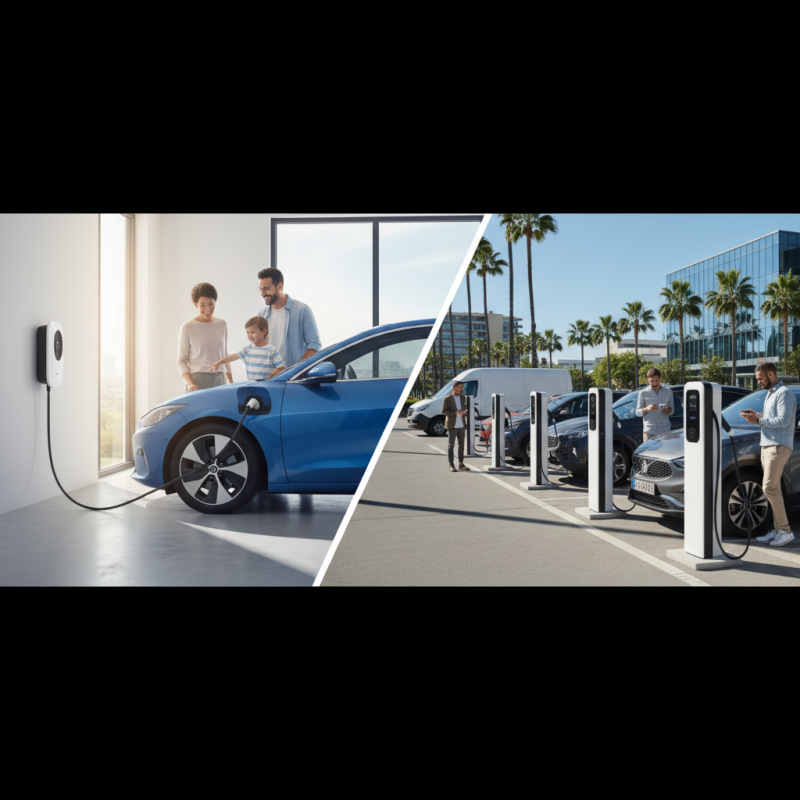
Top 10 EV Chargers: What You Need to Know for Home and Travel

Understanding the Importance of EV Chargers for Home and Travel

Electric vehicle (EV) chargers play a vital role in our lives today. For those who own EVs, knowing where to charge is essential. Many home chargers are available, but not all are suitable for every vehicle. Consider your car's battery capacity when choosing a charger. Some chargers offer faster charging times, while others are more affordable. This can be a bit daunting for new EV owners.

When traveling, planning charging stops is crucial. Many apps can help locate charging stations along your route. Be mindful of station availability. Not all stations will be functioning or compatible with your vehicle. Additionally, charging times can vary significantly. This can lead to unexpected delays. Having a backup charging plan can save you time and stress on the road.

Understanding the importance of having the right charger at home and planning for travel can enhance your EV experience. This requires a little extra thought, but it is worth it. Choosing the wrong charger or failing to plan can create problems. Knowledge is power in the world of electric vehicles.

Top 10 EV Chargers for Home and Travel

This bar chart displays the key metrics of the top 10 EV chargers in terms of charging speed, battery capacity, charging time, cost, and portability. Understanding these aspects is crucial for maximizing the efficiency and convenience of using EV chargers for both home and travel.

Types of EV Chargers: Level 1, Level 2, and DC Fast Chargers

When it comes to electric vehicles, understanding the types of chargers is crucial. There are three main types: Level 1, Level 2, and Dc Fast Chargers. Level 1 chargers use a standard household outlet. They are the slowest option but require no special installation. Plugging in overnight might work for those with lower daily mileage. However, this method can be quite limited for many users.

Level 2 chargers offer a faster solution. These chargers need a dedicated 240-volt circuit. Usually, they can deliver a full charge in a few hours. They are perfect for home use or destinations like shopping centers. However, installing a Level 2 charger might require some electrical work. This added expense can surprise many homeowners.

DC Fast Chargers are the quickest option. They can charge an EV to about 80% in just 30 minutes. These chargers are common along highways, catering to long-distance travelers. But they aren’t ideal for daily home use due to their high installation costs. A clear understanding of these types helps drivers choose the right charging solution for their lifestyle needs.

Top 10 EV Chargers: What You Need to Know for Home and Travel

Charger Type Power Output (kW) Charging Time (hours) Best Use Case Typical Location
Level 1 Charger 1.4 - 2.4 kW 8-20 hours Home charging Residential
Level 2 Charger 3.3 - 19.2 kW 4-10 hours Home & public charging Residential & Commercial
DC Fast Charger 50 - 350 kW 30 minutes - 1 hour Long-distance travel Highway stations
Tesla Supercharger 120 - 250 kW 30 minutes Tesla vehicles Tesla stations
Ultra Fast Charger 350 kW+ 15 - 30 minutes Speed-focused charging Urban locations

Key Features to Consider When Choosing an EV Charger

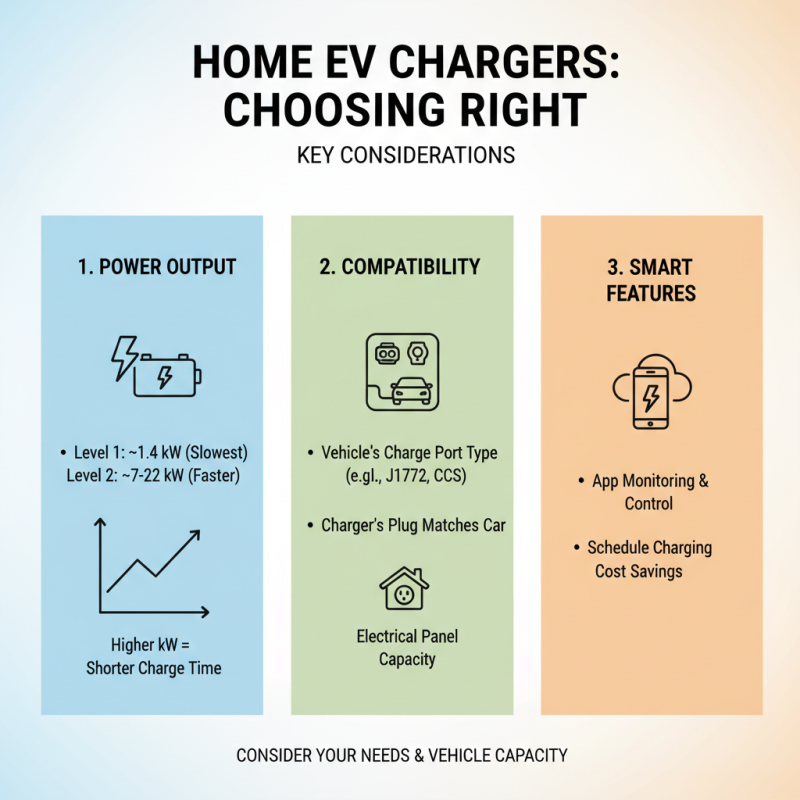
Choosing the right EV charger can feel overwhelming. Start by considering charging speed. Faster chargers will reduce your downtime, but they might come at a higher cost. Think about where you'll use the charger most. Home use often requires a Level 2 charger, while travel may call for more portable options.

Look into the ease of installation. Some chargers require professional help, which could increase your expenses. Others offer DIY installation, saving you time and money. Don't forget about compatibility with your electric vehicle. Ensure the charger works seamlessly with your model. You’ll want convenience, not frustration, on the road.

Lastly, think about smart features. Chargers with Wi-Fi connectivity can provide real-time data on usage. This could help manage your electricity costs. However, tech features may complicate basic operations. Balancing convenience and simplicity is key.

Top 10 EV Chargers for Home Use: Detailed Comparisons

Top 10 EV Chargers: What You Need to Know for Home and Travel

Choosing the right EV charger for home use is essential. Each charger has unique features. It's important to consider your specific needs and your vehicle's charging capacity. Think about the power output. A higher wattage can reduce charging time significantly.

Many chargers offer varying levels of portability. Some are easily transportable, while others are designed to stay in one spot. If you travel frequently, a compact charger may be ideal. However, if you have a dedicated parking space, a more permanent option might be better.

Look into installation requirements too. Some chargers need professional installation, while others are user-friendly. Many users experience confusion during the setup. Reading reviews helps, but it’s not always clear which options are best. Consider your home's electrical system as well. Will it support the charger you choose?

Top 10 EV Chargers for Travel: Portability and Performance

Traveling with an electric vehicle (EV) adds a unique dimension to road trips. Portability and performance are essential factors when choosing an EV charger for travel. Compact chargers can easily fit into your trunk. They simplify your travel experience without taking up too much space.

When selecting a portable charger, consider the charging speed. Some chargers offer faster charging times, which is crucial during long trips. A higher amperage can significantly reduce your wait time. Make sure you check compatibility with various charging stations along your route. It's important to have options.

Tips: Always plan your route ahead of time. Identify charging stations to avoid unexpected delays. Keep an emergency charger in your bag, just in case. You may encounter unreliable chargers while traveling. Having a backup is wise.

Carrying a charger that can adapt to different outlets is beneficial. This flexibility allows you to charge your EV anywhere. It’s not just about convenience; it’s about safety too. Monitor your vehicle's battery level. This practice helps you avoid running out of charge in unfamiliar areas.

Cost Considerations: Installation and Charging Fees Explained

The cost of installing an electric vehicle (EV) charger at home can vary widely. According to a recent report, the average price ranges from $1,200 to $2,500. This includes both the unit and installation fees. Homeowners often overlook potential electrical upgrades. Sometimes, circuit panels need modifications, adding to the overall cost. For those using a third-party installer, expect additional service fees that can inflate the budget.

Charging fees are another factor to consider. Public charging stations might charge between $0.10 to $0.40 per kWh. However, costs can fluctuate based on location and peak hours. Some charging networks impose a monthly membership fee. These latent expenses can catch new EV owners off guard. Remember, charging at home is generally cheaper, especially with a dedicated home charger.

Data from industry analyses suggest that charging at night can save more. Homeowners might save 30% or more on their electricity bills by utilizing off-peak rates. However, this requires an understanding of your local utility's pricing tiers. It's vital to pay attention to these details when planning for an EV. A small mistake in estimating costs can lead to budgeting issues in the long run.

Future Trends in EV Charging Technology and Infrastructure

Top 10 EV Chargers: What You Need to Know for Home and Travel

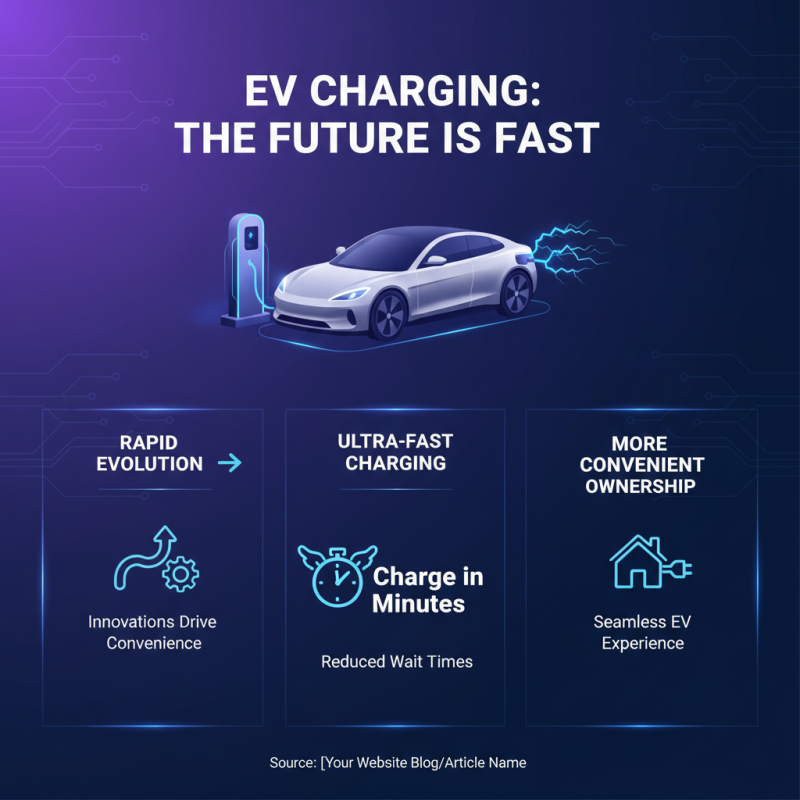
The future of EV charging technology is rapidly evolving, bringing exciting developments. Innovations in charging infrastructure aim to make electric vehicle ownership more convenient. A notable trend is ultra-fast charging stations. These enable vehicles to charge in a matter of minutes, reducing wait times significantly.

Wireless charging is also gaining traction. This technology allows EVs to charge simply by parking over a charging pad. However, adoption remains low due to high costs and technical challenges. Not every EV is compatible, and this limitation requires careful consideration.

Another trend is the expansion of charging networks. Locations for charging stations are becoming more strategic. Cities are planning to integrate charging stations in public spaces. Still, many areas lack adequate infrastructure. This gap highlights the need for better policies and investment. As charging becomes more accessible, it will help accelerate EV adoption. The journey toward widespread charging solutions is not without obstacles, but it is undeniably on the horizon.

FAQS

: What is the main goal of this initiative?

: The primary goal is to enhance community well-being through sustainable practices.

How can individuals contribute?

Individuals can participate by volunteering or adopting eco-friendly habits at home.

Are there specific events to join?

Yes, regular workshops and clean-up events are organized to encourage participation.

What resources are available for learning?

Helpful guides, online courses, and community forums provide valuable information.

How does this initiative impact the environment?

It aims to reduce waste and promote biodiversity in local ecosystems.

Is there any cost associated with participation?

Most events are free of charge, but donations are appreciated for supplies.

Can children get involved?

Absolutely! There are activities designed specifically for younger participants.

What challenges do organizers face?

Engaging community members consistently can be difficult. It's an ongoing struggle.

Where can I find updates on events?

Updates are posted on community boards and social media platforms regularly.

What feedback is being gathered from participants?

Organizers seek input on experiences and suggestions to improve future activities.

Conclusion

Electric Vehicle (EV) chargers play a crucial role in facilitating the adoption of electric vehicles, both at home and during travel. Understanding the different types of EV chargers—Level 1, Level 2, and DC Fast chargers—is essential for selecting the right solution for your needs. Key features, such as charging speed, installation requirements, and compatibility with various vehicle models, should be considered when making a choice.

This comprehensive guide explores the top EV chargers suitable for home use, offering detailed comparisons to help consumers make informed decisions. Additionally, it highlights the importance of portability and performance for EV chargers designed for travel. Cost considerations, including installation and charging fees, are also addressed, alongside insights into future trends in EV charging technology and infrastructure. This knowledge empowers EV owners to better navigate the evolving landscape of electric vehicle charging.
Isabella

Isabella

Isabella is a dedicated marketing professional at Beijing Chuang Sifang Electronics Group Co., Ltd., where she combines her passion for technology with her expertise in strategic communication. With a deep understanding of the company's innovative product offerings, Isabella plays a vital role in......
Previous Exploring the Benefits of Current Transformers for Efficient Energy Management